
| Year 2010 No. 60, December 6, 2010 | ARCHIVE | HOME | JBBOOKS | SUBSCRIBE |
|---|
Workers' Daily Internet Edition: Article Index :
Student Occupations in Defence of the Right to Education
Interview with a Participant in the Student Occupation of the Bodleian Library Building, Oxford
Daily On Line Newspaper of the
Revolutionary Communist Party of Britain (Marxist-Leninist)
Web Site:
http://www.rcpbml.org.uk
e-mail:
office@rcpbml.org.uk
Subscription Rates (Cheques made payable to RCPB(ML))
170, Wandsworth Road, London, SW8 2LA.
Phone: 020 7627 0599:
Workers' Weekly Printed Edition:
4 issues - £3.15, 6 months - £19.95 for 26 issues, Yearly -
£36.95 (including postage)
Workers' Daily Internet Edition
Freely available online
Workers' Daily Email Edition
Subscribe
by e-mail daily:Free / Donate
Subscribe to
WDIE Lead Article RSS Feed (free)

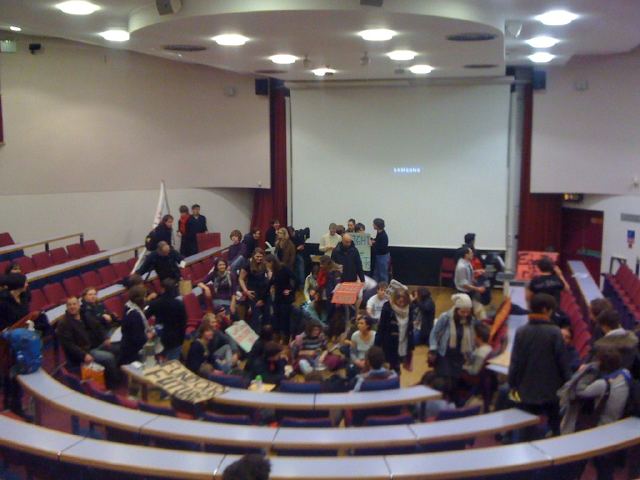
Occupation at Warwick University

Demonstration at Sheffield University


Southbank University

Cardiff

University College London


Cambridge

School of Oriental and African Studies
(SOAS)

London Metropolitan University

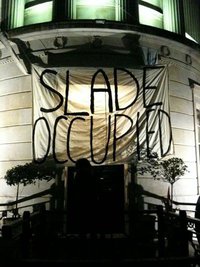
The Slade School of Fine Art London

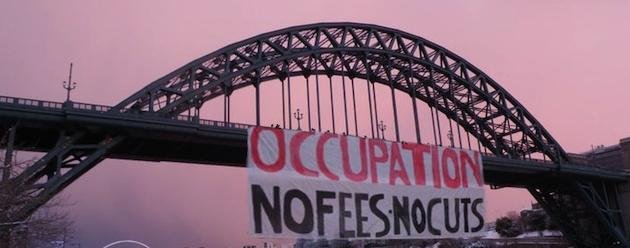
Newcastle University


Students from Schools, Colleges
and Universities in Oxford occupied the iconic Radcliffe Camera building of the
Bodleian library at Oxford University on November 24 as part of a national day
of action voicing the demand that education is a right. Videos, photos and
reports can be found at
http://www.occupiedoxford.org
clamorousvoice.wordpress.com
http://www.oxford.indymedia.org.uk
and many other websites. WDIE interviewed a sixth-form student who took
part in the occupation.
WDIE: What are the main
issues in the current wave of student actions?
Student: Many students are very upset about the proposed rise in tuition
fees and cuts to education funding in general. Us school students tend to also
include the massive cutbacks to Education Maintenance Allowance as it's
something which will directly affect us very soon.
WDIE: Why did you occupy
the Radcliffe Camera?
Student: We occupied the Radcliffe Camera because it symbolises the
Bodleian library – an institution which apparently holds one copy of
every book written in the English language. This massive resource of human
knowledge is then restricted to an élite clique of academics and
students. Many students see this as fundamentally wrong.
WDIE: What happened?
Student: At first we gathered at Carfax Tower [which marks the city
centre] and began marching down High Street. Everyone stopped at the Radcliffe
Camera; I remember the march was very short. About twenty marchers jumped the
fence and took the steps. I made my way to the fence and followed them, and by
the time I'd made it to the Camera the steps were all taken up. There was then
a small pause as those on the steps urged the marchers to jump over the fence
and join them.
I made my way to the top of the steps and went inside the building. A democratic assembly was formed, based on consensus decision making, and one of their first decisions was to keep the doors open for as long as possible before closing them shut. Once the people outside knew it was safe to occupy a lot of them came inside.
WDIE: What support did you
get and what was the response of the university management?
Student: We got loads of messages of solidarity from trade unionists and
lecturers. They even contributed some food for the occupation. Obviously
teachers couldn't officially support us, and they would never condone students
leaving lessons to go and protest but despite this many were sympathetic. The
librarians were quite co-operative, and we made sure not to bother them too
much. University management was against the occupation, and they threatened
disciplinary action against any students in the building. The University
Proctors have since been appealing to those involved in the occupation to step
forward and be fined for breaking university rules. So far nobody has been
fined.
WDIE: What happened when
the police were brought in to end the occupation?
Student: I was outside at the time, but I gather that they came up
through an underground tunnel which leads into the Radcliffe Camera from
Brasenose College. Those in the building were aware of the tunnel, but it
wasn't seen as a possible entrance because the door leading into it was locked.
The police used a battering ram to smash through the locked door and flush out
protesters from the inside. Some protesters fled to other corners of the
building and it took the police about an hour to completely empty the building.
The only damage made to the building was carried out by the police, and they
were the only ones to use violence. Along with the protest this Tuesday,
students are waking up to the concept of the state as a repressive institution
which maintains its role by violence and brutality. It is at times like these
that the true nature of the system is revealed.
WDIE: The Metropolitan
Police chief recently stated that the "game has changed" in policing
student protests, echoing the infamous words of Tony Blair. Can you comment on
this?
Student: It's clear that if the police want to act more aggressively to
suppress peaceful protest, they will only escalate the situation. This
escalation would be undesirable for both peaceful protesters and the police.
* * *
Statement from Students Occupying Radcliffe Camera in Oxford
We – students and residents of Oxford from a range of institutions and backgrounds – are occupying the Radcliffe Camera because we oppose all public sector cuts. We stand in solidarity with those who are affected by the cuts and those who are resisting them.
We believe that education should be public and free for all. To this end we demand that the University of Oxford reiterate its opposition to education cuts and commit to not increasing fees for any courses. We also demand that the University pledges never to privatise.
These demands are non-negotiable. We will only accept a response from the University in the form of a public statement by the Vice Chancellor to the national media.
The University should not pursue or support any action taken against those involved in this legitimate and peaceful form of protest.
We call upon other education institutions in Oxford and nationwide to publicly support these principles and demands.
This library is now open to all members of the public and we invite you to join us.