
|
|
||||
|---|---|---|---|---|
| Volume 42 Number 13, April 21, 2012 | ARCHIVE | HOME | JBCENTRE | SUBSCRIBE |
Workers' Weekly Internet Edition: Article Index :
Party Funding, Corruption and the Concentration of Power
Unison Health Care Conference 2012:
Our NHS Our FuturePetition against Health and Social Care Bill
Cuts in NHS Mental Health Services
Northeast Meeting to Mark the Centenary of the Birth of Kim Il Sung
Weekly On Line Newspaper of the
Revolutionary Communist Party of Britain (Marxist-Leninist)
Website:
http://www.rcpbml.org.uk
E-mail:
office@rcpbml.org.uk
170, Wandsworth Road, London, SW8 2LA.
Phone: 020 7627 0599:
Workers'Weekly Internet Edition
Freely available online
Workers' Weekly E-mail Edition
Subscribe
by e-mail daily: Free / Donate
WW
Internet RSS Feed

The Line of March Monthly
Publication of RCPB(ML)Subscribe
 On March 26, Francis Maude, Minister for the Cabinet
Office, made a statement to the House of Commons on party funding.
On March 26, Francis Maude, Minister for the Cabinet
Office, made a statement to the House of Commons on party funding.
The statement was made in the context of the scandalous revelations of the “cash for Cameron” affair. The previous day, the Conservative Party co-treasurer, Peter Cruddas, had resigned when it had been revealed by the Sunday Times that large donations to the party could secure access to the Prime Minister. This boast was described by Francis Maude as “completely unacceptable and wrong, and much of what he said was simply not true”. This was obviously seen as preferable to the interpretation that the Tory Party had systematically been flouting the electoral law which demands that any donation to a party above £7,500 has to be declared to the Electoral Commission.
This example serves to underline that the issue of party funding is a running sore to the big Westminster parties. How are they to be funded when they are not mass parties of the electorate, but cartel parties charged with the administration of the state in the interests of the rich and powerful? The issue becomes even more acute when decisions in Westminster which affect the direction of the economy, of society, of peace and war, are made not through debate between contending interests in parliament, but by an executive – the Prime Minister and Cabinet – which is effectively unaccountable even to the House of Commons let alone the electorate as a whole. This throws light on why the “cash-for-access” channel was considered so appropriate for the government.
An obvious way for the Westminster parties to receive their funding as administrators of the state at the behest of the monopolies is to be funded directly by the state. For these cartel parties, this would solve the problem of fund-raising and consolidate the mechanisms whereby the electorate is completely shut out of decision-making. For them, the issue of “standards in public life” has always been one of finance, and of combating egregious self-serving from the holding of political power. The Committee on Standards in Public Life itself was set up by the John Major government in 1994 after the Nolan Inquiry into the “cash-for-questions” affair. In 1997, Tony Blair extended its terms of reference in order to “review issues in relation to the funding of political parties, and to make recommendations as to any changes in present arrangements”. Out of this arose the requirement for political parties to be registered after the model of company registration, and indeed this was first done through Companies House. The regulation of loans to political parties in addition to donations was reviewed after the 2005 election campaign.
The present chair of the Committee is Sir Christopher Kelly. Francis Maude referred to his report of last November in his Commons statement. However, the recommendation for increased state funding is on the face of it considered too sensitive to be implemented when cuts and austerity are the watchwords.
While the Conservatives accuse Labour of being in the pay of the unions, Labour accuses the Conservatives of being in the pay of the wealthy. In reality, all of the big parties receive massive amounts from rich benefactors. A large portion of Labour Party funding indeed comes from the unions. Yet the experience of thirteen years of Labour government and two in almost-silent “opposition” championing war and the anti-social offensive has completely discredited any notion of the old arrangement between the Labour Party and the trade union movement. The Labour Party has sought to restrict union influence, while the unions themselves have been beginning to question their allegiance to Labour and to raise issues of working class representation afresh.
To call for capping donations can be seen as both a public relations exercise, as well as to move further from established sources of support. In order to continue to dominate the political process, especially during elections through huge campaign expenditures, the implication is that this will have to be funded through increase state subsidies, which already runs into the millions in various direct and indirect ways.
Access to wealth should not be a block to anybody exercising their right to elect and be elected. However, moves in the direction of state funding of political parties will do nothing to reduce the role of money in politics, but will further entrench it and will itself become a source of further corruption. Moreover, it will embed the narrow definition of parties as electoral machines whose aim is to come to power, increasing the separation of the electorate from the political process.
The alternative lies in bringing about new political arrangements where parties do not present candidates for election. Candidates, able to provide a voice for the interests of women, workers, youth and other collectives of the people that they directly represent, should be selected and have their agenda set by these collectives themselves.
There should be no funding of political parties by the state. Parties should be funded by their own members and supporters, and further, should be barred from selecting candidates and coming to power. The state should instead fund mechanisms of selection and election designed to prevent the domination of the process by a political cartel and aimed at facilitating the participation of the people in governance.
The whole issue of party funding has become a scandal. Even the trade unions in this context are seen as nothing more than special interest groups whose funding of parties has to be kept in check, completely denying the necessity for the voice of the organised workers’ movement to be heard in the legislative body as the decisive voice in favour of the public good. The present state of party funding is completely unacceptable, and flies in the face of the right of the electorate to elect and be elected. The parameters of the discussion on the issue in parliament do not touch on this nub of the matter at all. That the state should fund political parties is impermissible. On the contrary, funding should be allocated to a political process which facilitates the right of the electorate to elect and be elected. This is no more than what is acceptable in a modern political process.
ShareThis
Unison Health Care Conference 2012:
 The Unison Health Care Conference 2012 opens this week in Brighton.
The conference takes place at a crucial time for the all working in the health
service in Britain. Over the last year since the last conference, the union has
been one of the main forces in the massive organised opposition to demand that
the Coalition government drop the Health and Social Care Bill. The bill was
eventually rail-roaded through Parliament to get the Royal Assent on March 27.
This week delegates will be discussing how to continue the resistance to the
implementation of the Act which is aimed at further opening up the NHS to
further fragmentation and handing over provision and commissioning of services
to the private sector monopolies. The conference theme Our NHS Our
Future captures the need at this time to safeguard the future of the NHS,
take forward the resistance of health workers and professionals and plant the
alternative that a health care is a right that must be given a guarantee and
publicly provided to meet the needs of all.
The Unison Health Care Conference 2012 opens this week in Brighton.
The conference takes place at a crucial time for the all working in the health
service in Britain. Over the last year since the last conference, the union has
been one of the main forces in the massive organised opposition to demand that
the Coalition government drop the Health and Social Care Bill. The bill was
eventually rail-roaded through Parliament to get the Royal Assent on March 27.
This week delegates will be discussing how to continue the resistance to the
implementation of the Act which is aimed at further opening up the NHS to
further fragmentation and handing over provision and commissioning of services
to the private sector monopolies. The conference theme Our NHS Our
Future captures the need at this time to safeguard the future of the NHS,
take forward the resistance of health workers and professionals and plant the
alternative that a health care is a right that must be given a guarantee and
publicly provided to meet the needs of all.
That government now claims to have some legal force with its Health and Social Care Act to wreck the NHS in favour the “right” of the monopolies to profit from health care. This must be countered by the legitimacy of all sections of the people that public right must prevail over the monopoly right that the coalition government is championing in health. The prevalence of monopoly right over public right gives no future to the NHS and to the right of the people to health care and has no legitimacy. The health workers and all sections of the people are fighting for the public good in opposing the implementation of the Health and Social Care Act and in fighting to safeguard the future of the NHS.
 This week Unison health worker delegates sum up the their
experiences in their struggles over the last year against the Coalition
government and discuss and plan how to take their resistance forward to the
attacks on the NHS and on their pay, pensions and other terms and conditions.
The discussion focus groups and motions concentrate on these issues. They give
an important opportunity to build the organised resistance to the
implementation of Health and Social Care Act, to the attacks on pay, pensions
and other terms and conditions, whilst at the same time also on the fight for
the alternative that has been the question taken up for solution by the whole
working class movement since 2011.
This week Unison health worker delegates sum up the their
experiences in their struggles over the last year against the Coalition
government and discuss and plan how to take their resistance forward to the
attacks on the NHS and on their pay, pensions and other terms and conditions.
The discussion focus groups and motions concentrate on these issues. They give
an important opportunity to build the organised resistance to the
implementation of Health and Social Care Act, to the attacks on pay, pensions
and other terms and conditions, whilst at the same time also on the fight for
the alternative that has been the question taken up for solution by the whole
working class movement since 2011.
Among the important focus groups there are: Campaigning against privatisation in the new NH$ which has the “aims to find out ways to challenge and confront the privatisation and fragmentation presented by the Bill”; Any qualified provider: how will it affect you? which points out that many health services will be commissioned via this model in 2012 and that the “government has stated that TUPE will not apply if a provider fails under this model and staff will be forced to look new work on the open market”; Defending Agenda for Change which takes up the issue that the government having imposed spending cuts and wage freezes now intends to impose changes to the national agreement and impose local pay and conditions in an attempt to destroy further the livelihood of health workers; Pensions – the next steps which will outline the latest steps in the pension campaign “as well as looking at how we can protect NHS pensions in the future”.
Among the motions there are: NHS Reforms and the threat of Privatisation moved by the Health Service Group Executive which among other things calls for developing “an organising strategy to meet the new challenges for the union presented by Any Qualified Provider”; and the Invest in Health Care – Stop the Bill moved by Gateshead health which calls for the fight for the alternative. “The alternative is to stop using the economy to pay the rich and instead invest in health care and other social programmes.” These and other motions have been composited in composite F.
The Unison Health Care Conference runs from Monday to Wednesday. WWIE wishes every success to the delegates in their deliberations.
See UNISON Health Care – Our NHS Our Future: http://www.unison.org.uk/ournhs/
ShareThis
A petition was presented to the House of Commons on behalf of the residents of Scunthorpe by their MP Nicholas Dakin on March 27, the day the Health and Social Care Act received the Royal Assent. The Labour MP said: “It is fitting that just before the recess I should be presenting a petition against the Health and Social Care Bill, as it has dominated our proceedings in recent days. I commend in particular Karen Walker on her work in helping to gather the signatures on the petition.”
The petition states:
The Petition of residents of Scunthorpe,
Declares that the Petitioners are opposed to the reforms to the NHS that will be brought about by the Health and Social Care Bill as the Petitioners believe that they will damage the quality of services provided by the NHS.
The Petitioners therefore request that the House of Commons urges the Government to reverse the reforms to the NHS brought about by the Health and Social Care Bill as soon as possible.
And the Petitioners remain, etc.
ShareThis
By a professional in the mental health field
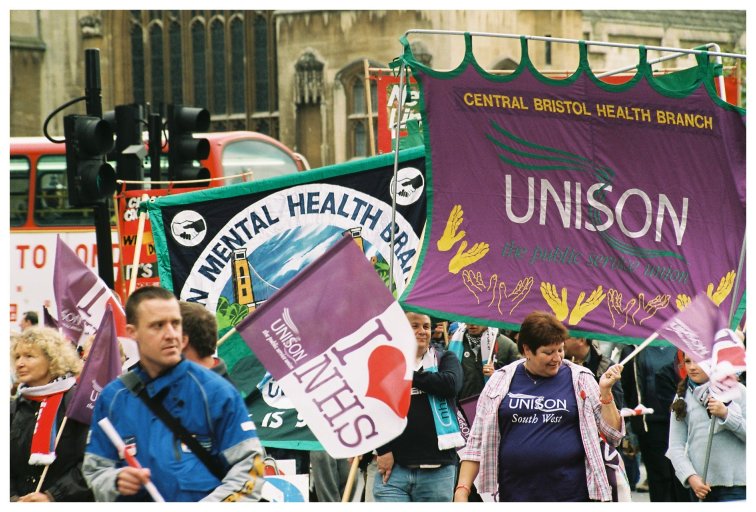 It is a shame to see that the cuts in NHS spending of a projected
20% have so quickly been introduced to this most vulnerable of patient
community. They are introduced by both overt and covert means. For example
austerity measures are being sold to NHS staff in the same spirit of save and
utilise as was sold to the working class in World War II. However, those same
people are not told, as the government well knows, that borrowing from banks is
a constant process in capitalist economies and that the deficit now is by no
means the largest historically. The pressure to cut can therefore be seen as
serving another agenda of minimising the claims of working people on the social
wealth of the country that is made by them. This means reducing pay in real
terms, attacking pensions and creating a culture of anxiety and identification
with servitude to erode the esteem of the people.
It is a shame to see that the cuts in NHS spending of a projected
20% have so quickly been introduced to this most vulnerable of patient
community. They are introduced by both overt and covert means. For example
austerity measures are being sold to NHS staff in the same spirit of save and
utilise as was sold to the working class in World War II. However, those same
people are not told, as the government well knows, that borrowing from banks is
a constant process in capitalist economies and that the deficit now is by no
means the largest historically. The pressure to cut can therefore be seen as
serving another agenda of minimising the claims of working people on the social
wealth of the country that is made by them. This means reducing pay in real
terms, attacking pensions and creating a culture of anxiety and identification
with servitude to erode the esteem of the people.
If you consider that this is the agenda and the psychology impacting on the working people, it is not hard to reflect how this is magnified for the mentally unwell. People with mental health problems often are unable to work or to work at an optimum level as their skills and abilities are impacted by distress.
The cuts are therefore especially deleterious to them. For example, support services provided by the NHS are being axed, to supposedly be taken up by the big society, by unregulated charitable clinical services and by the colleagues who stay in the NHS adapting to carry ever greater case-loads. The charitable sector is not the friend of the NHS in that some are taking the cynical language of cuts to reduce services too. For example NICE guidelines recommend particular psychological treatments for schizophrenia, but as this population ages, their services can be transferred to “care home” status if they need to live in residential settings. By so doing all treatments can be stopped overnight. Diagnosis becomes an economic pawn rather than being about optimal and appropriate treatment.
In other cases in NHS settings, people disabled by mental health difficulties are losing their home and community support services. This is not just the occasional support, but in some cases all support and rapid discharge. To try rationalise this irrational situation, there are reviews of need and diagnosis. It cannot be that these people have all returned to a non-clinical level of mind. Rather it is the government’s attack on the most vulnerable to take the people’s taxes for the agenda and the pockets of the rich.
 Another tactic are the so-called “personal
budgets” for mental health patients. These are means-tested and
clinically approved budgets for patients to spend in ways that they feel help
their conditions. However, these budgets are time-limited and not a rolling
arrangement. Once they are spent, there is no more and the treatment is
complete economically. Mentally unwell and vulnerable people are being invited
to navigate around this NHS initiative of the “free market” of
services. This is positive for some in the short term, but as a treatment
strategy it bypasses good psychological approaches to mental health and tries
to pay patients off and then close the door behind them.
Another tactic are the so-called “personal
budgets” for mental health patients. These are means-tested and
clinically approved budgets for patients to spend in ways that they feel help
their conditions. However, these budgets are time-limited and not a rolling
arrangement. Once they are spent, there is no more and the treatment is
complete economically. Mentally unwell and vulnerable people are being invited
to navigate around this NHS initiative of the “free market” of
services. This is positive for some in the short term, but as a treatment
strategy it bypasses good psychological approaches to mental health and tries
to pay patients off and then close the door behind them.
One of these agendas is the systematic privatisation of the health service, started by Thatcher when she contracted out cleaning services, and on the tightest budget it brought with it hospital infections and miserable death for vulnerable unwell people. These infections are not routinely listed on death certificates even though they routinely undermining medical treatment and the body’s immunity and killing people. Now many auxiliary and infrastructure support services are tendered out. Clinical services are going the same way. Private mental health centres are setting up and waiting for the lucrative contracts; these are not charities in the sense of philanthropy, but wealthy individuals cornering an emerging market.
It is a tragedy and a shame that the decency and sense of flexibility and fair play is being turned against the working people and the population in general. We are like lambs being asked to liaise with the proverbial wolf and fear of economic destitution is the stick that is left looming.
Services are being transferred at unrealistically tendered costs and are unlikely to be sustained. The services will not survive and so will ultimately be lost or absorbed into the compressed manpower of the NHS. Think of any service that might be levered into private hands at a saving to the government and at an unregulated and untested private consortia, than wait and see it go into the money-making arena or fail – either way the public loses, and the health monopolies gain.
Services in the line of fire are unlimited and NHS buildings in some areas are also being sold, replaced by rented accommodation, thereby providing a market place for landlords on a mammoth scale. There will be no NHS by virtue of the infrastructure being privatised. We are increasingly meant to dissociate the principles of the NHS from the ethos of public service for the people by the people and adopt inertia to the free market and private profit motif.
In response, we must resist all attacks on the majority of the people and the NHS which these redesigns serve. Fight to sustain and develop the NHS provided by the people for the people from the people’s social product! It is our NHS, and we must safeguard its future!
ShareThis
 On Sunday, April 15, the Northeast Society for
Friendship with Korea marked the day of the hundredth anniversary of the birth
of Kim Il Sung with a meeting and social in Heaton, Newcastle.
On Sunday, April 15, the Northeast Society for
Friendship with Korea marked the day of the hundredth anniversary of the birth
of Kim Il Sung with a meeting and social in Heaton, Newcastle.
Blanch Carpenter, secretary of the society, introduced the event by speaking about the life of Kim Il Sung as the revolutionary leader of the Democratic People’s Republic of Korea (DPRK). Firstly, she spoke of his leadership in the struggle against the Japanese occupation of Korea, then in the founding of the DPRK and then in the heroic war against the Anglo-US invaders who started the Korean war. Blanch emphasised the socialist measures taken right from 1946 such as the abolition of the landlords, the introduction of equal pay for men and women, the ending of child labour and after the Korean war the re-building of a country almost completely flattened by the US bombers. She spoke about the Juche principle of Kim Il Sung in which he emphasised the building of socialism through self-reliance and making the people conscious of their role in building the new socialist society. She also highlighted Kim Il Sung's work for the unity of all Korea and the principles he laid down of one country and two systems in order to bring that about as soon as possible.
Following Blanch's contribution there was a lively discussion in which the work to build friendship between the people of Britain and the Korean people was emphasised. After two short films the meeting concluded with a toast to Kim Jong Un. All participants wished him every success in leading the work of the Workers' Party of Korea to take the DPRK forward to further success in socialist construction, the reunification of Korea, and in defending the DPRK from threats to its sovereignty from the US and other foreign imperialists.
ShareThis