
|
|
||||
|---|---|---|---|---|
| Volume 42 Number 36, December 1, 2012 | ARCHIVE | HOME | JBCENTRE | SUBSCRIBE |
A Future that Really Works!
Workers' Weekly Internet Edition: Article Index :
A Future that Really Works!:
The Programme of the Working ClassStudents Demand Empowerment at #Demo2012
The Anti-Social Effects of the Merging of Hospital Trusts
Thousands Demonstrate against Closure of Lewisham Hospital’s A&E
Meeting to Take Forward the Campaign to Save Lewisham Hospital
“We’ll fight for our jobs, anytime, any place, anywhere”:
Struggle to Stop Privatisation of NHS and Defend Jobs and Services Continues Apace throughout the CountryBritish Government’s Interference in Middle East:
Government Must Be Held to Account for its Stands and Actions
Weekly On Line Newspaper of the
Revolutionary Communist Party of Britain (Marxist-Leninist)
Website:
http://www.rcpbml.org.uk
E-mail:
office@rcpbml.org.uk
170, Wandsworth Road, London, SW8 2LA.
Phone: 020 7627 0599:
Workers'Weekly Internet Edition
Freely available online
Workers' Weekly E-mail Edition
Subscribe
by e-mail daily: Free / Donate
WW
Internet RSS Feed

The Line of March Monthly
Publication of RCPB(ML)Subscribe
A Future that Really Works!
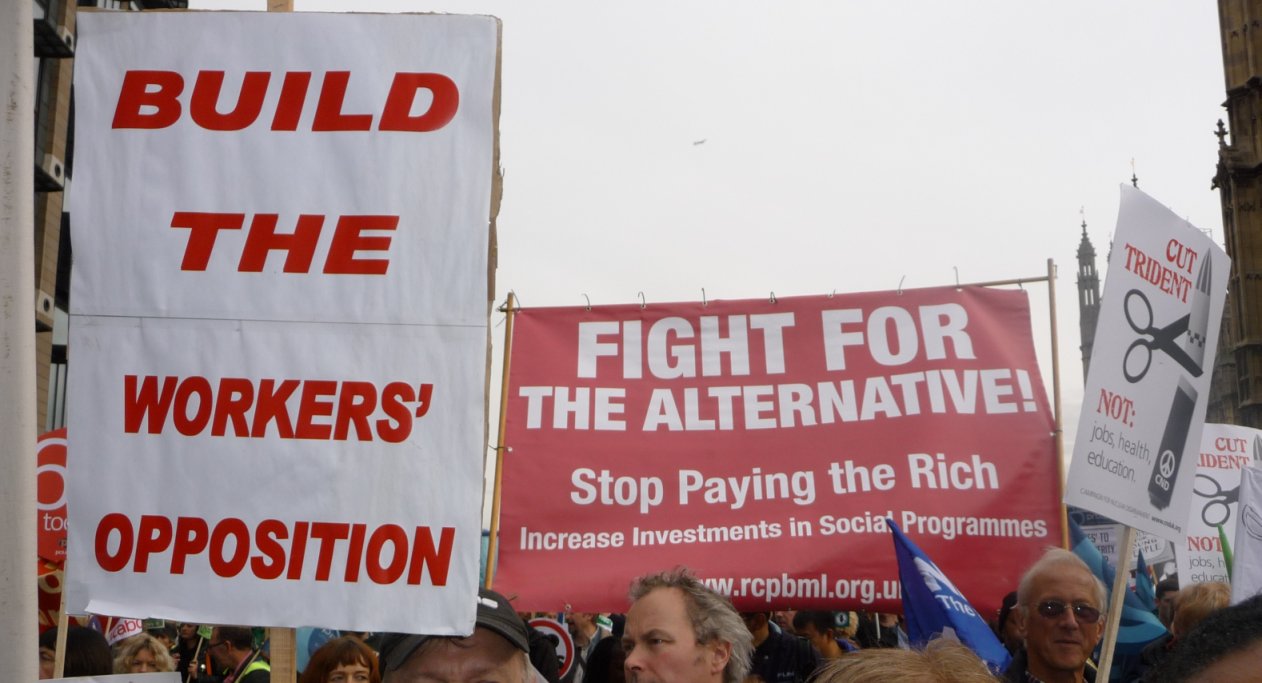
On the agenda for the working class movement and the Workers’
Opposition is to take the necessary steps to develop and further strengthen the
organisation of the resistance of the working class and people to the so-called
“austerity” programme of the Coalition government.
Chancellor George Osborne’s autumn statement on December 5 will underline the assertion of the ConDems that the austerity programme is set to last for years. This anti-social programme is being carried out under the fraudulent banner of “deficit reduction”. The mantra of “deficit reduction” covers over that the government’s aim is not in fact to “balance the budget” but to slash investment in social programmes in favour of schemes to pay the rich and to privatise public services. It is to uphold the “right” of the monopolies and financial oligarchy to increase their stranglehold over the economy and the whole life of the country, while absolving the government of the duty to serve the public good.
While the Workers’ Opposition are calling for a growing economy that serves the needs of the people, the ConDem government is insisting that “growth” means the “right” of the monopolies to aim for the maximum profit, and that the rights of the workers must be disregarded, that the workers are no more than a necessary evil, and the intensity of work must be stepped up, the “labour market” “deregulated”, corporation tax slashed, conditions and health and safety at work disregarded, pensions attacked, and a failing economy regulated so that paying the rich is guaranteed. The rich see no future unless this austerity programme is endless and that the agenda is dictated to the working people at every level and in every sphere.
It is very necessary that the working class movement is resisting this completely draconian offensive. In the present there is crisis of the economy, the political institutions and of the destruction of the natural and social environment. It is therefore completely just that the working class movement should demand a future that works, in which the dignity of labour is recognised, that the marginalisation of the working class and people from any kind of decision-making should be ended, and that the people gain control of their lives in every aspect. In short, the working class and people are in the course of their resistance searching for the alternative, for the line of march to a future which really works!
At this time, the programme which expresses this future in the present and unites the whole working class movement is the programme to stop paying the rich and increase investments in social programmes. It is a fighting programme to expand investment in social programmes, the social and public sector of the economy and a programme that demands more wealth is put back into the economy and preventing the added value produced by the working class being taken out of the economy by the financial oligarchy. It is a programme that reflects the struggle between the old direction represented by paying the rich and imposing austerity and the new direction of putting more into the economy than is taken out and organising a society for the benefit of its members and that guarantees their rights to a livelihood, to health care, housing and the rights of all. It also upholds the vital question of what is needed for an alternative to the wars and occupations pursued by successive British governments. It is a programme that there is an alternative to war and that taking a stand for this now is the precondition for bringing about a future without war.
The political process requires renewal so that it represents the vast majority of people. The old arrangements of a party in power and a party in opposition are no longer working, and political power is being further concentrated in the hands of a few within the Cabinet. Overall, the government is financing private interests with public funds in disregard of the public good. A future that works actually requires investment in social programmes, public services and public infrastructure in order for the modern socialised economy to flourish. This is what is flagrantly being denied by imposing the austerity programme on society.
The alternative rests in the working class rallying the people behind its own independent programme, a programme that will reverse the present attacks and open the way to a new society worthy of human beings, a future that really works. This programme must be built around the demand to stop paying the rich and increase investments in social programmes. The working class movement must fight for itself to have that power to decide the direction of society and the economy.
Stop Paying the Rich!
Reject and Resist the “Austerity” Programme!
Increase Investments in Social Programmes!
ShareThis
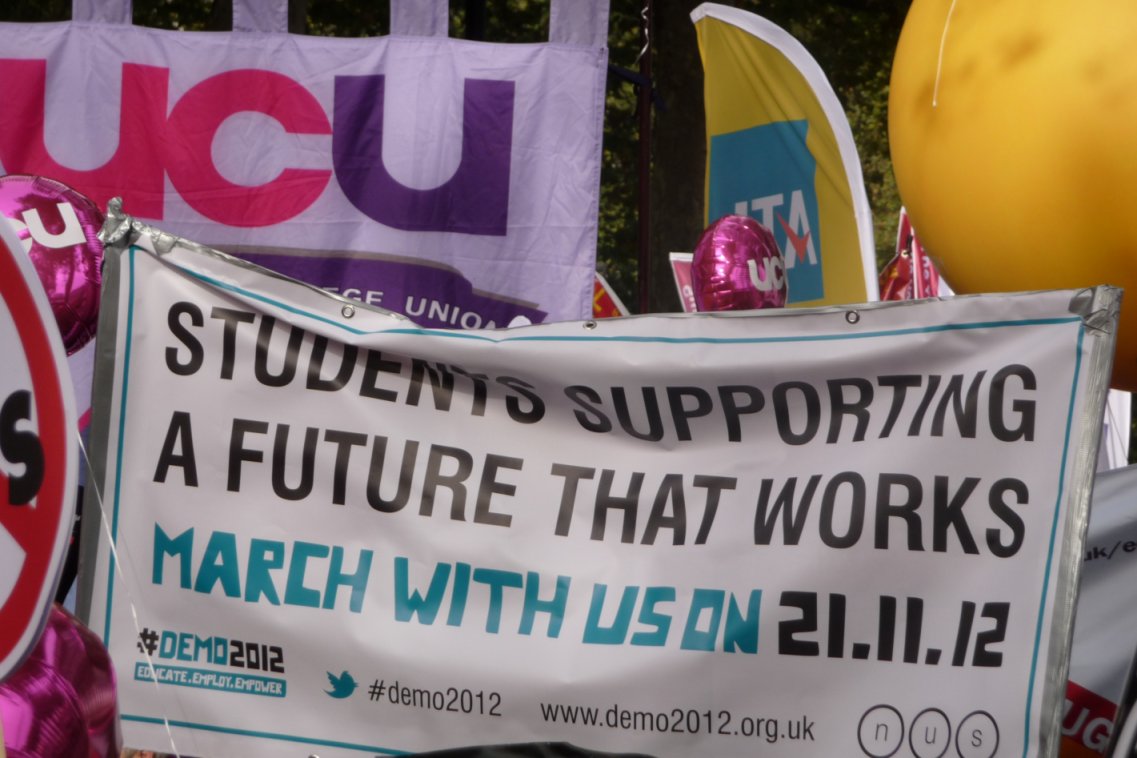
More than 10,000
students, workers in higher education and other concerned people and supporters
marched through central London on November 21. The NUS called
“#Demo2012” under the slogan Educate, Employ, Empower.
“The current government has put the future of an entire generation at risk. Jobs are hard to come by, students are saddled with unprecedented levels of debt, it’s a struggle to get onto the property ladder, and state pensions are being phased out,” said the NUS. “Now we have an opportunity to create a movement that empowers us to take back our future.”
The Education Activist Network, writing in support of the demonstration, said: “This autumn is only the start; if we want a future then we’re going to have to fight austerity.”
Taking place just a month after the huge TUC march and rally “For a Future that Works”, the march was the first national student mobilisation since the massive 50,000-strong demonstration of 2010, which marked a new phase of the student movement. Particularly evident in what was being said in the latest action, the slogans and the demands, was the growing consciousness in the movement that empowerment is at the heart of the issue. It is a consciousness that it is up to the students themselves to take control of their future.
Students are setting their own political agenda and will ensure that education funding and the chronic employment situation faced by graduates are key election issues. Yet, students “can’t just sit back and wait for the next election,” said NUS President Liam Burns; “... it’s about time we started setting the agenda.”
In this respect, students are taking up the right to hold those elected to account. Moving beyond the limitations of pressurising politicians, students are demanding that politicians listen, represent students’ interests, and do not renege on their promises. Liberal Democrat leader and Deputy Prime Minister Nick Clegg, in particular, has become a focal figure of this anger.
It is in the context that the Metropolitan Police took measures to prevent students from marching through Parliament Square. “This government has no electoral mandate for raising fees or attacking the welfare state, and the attempts to prevent us from marching to demonstrate this have no legitimacy either,” said the National Campaign Against Fees and Cuts, who, with the University of London Union, organised a feeder march. “When the police are ensuring dissent is kept away from our democratic structures, the legitimacy of both the police and the government are called into question.”
Students should not allow themselves to be diverted by such divisive measures that aim to split them on the basis of being either “moderate” or “radical”. They must remain united in their struggle to defeat the austerity agenda in the universities and build an empowering movement to end their marginalisation that will bring into being their alternative vision for the future of education.
ShareThis
Emergency
admissions to hospitals have risen by 37% over the last 10 years1. But in the face of increasing
need for health care by the population the government is cutting £20
billion from the nation’s health budget. Inevitably this places great
strain on the systems within hospital and community care, to the extent that
10% of hospital doctors surveyed by the Royal College of Physicians said they
do not feel safe in the care delivered where they work and would not recommend
their hospital.
This is happening in a context of an agenda to privatise swathes of the NHS, using the powers of the Health and Social Care Act. In September it was reported that contracts for 400 services were up for tender, with £250m contracts signed in one week. £750m of services are currently being opened to competition – put up for tender.
Many local hospital trusts are being forced to undertake mergers into large groupings. Financial difficulties are used to threaten them with being treated as a “failed trust” and taken over by a private health corporation. In April this year the largest Merged Trust in the UK was formed from three inner-city hospital trusts in east London2. This now employs approximately 15,000 staff and has a budget of around £1.2499bn.
The restructure to bring three trusts into one with a system of management that integrates the different hospitals is now in the implementation phase with about 150 staff already issued with redundancy notices. This has been a traumatic experience for many staff and services. Two thousand staff were informed that they were potentially at risk, and many of them had go through competitive internal interviews to apply for their own jobs in the new structure.
Part of the official rationale for the restructure is to reduce management and “back office” costs. But many senior clinical staff – pharmacists, radiographers, therapists – have been affected with some of the most experienced and skilled staff forced out. And on the other hand many low-paid staff working in IT, administration and clerical jobs, stores, etc., are losing their jobs or have been down-banded with lower pay, contributing to poverty in some of the most deprived boroughs in England.
A radical restructure of three major hospital trusts to build them into one organisation was a huge undertaking under any circumstances. But the whole restructuring itself was rushed though in a period of four months (90-day consultation plus a month to implement) for an official start on October 1. The driving factor on timing was externally set deadlines and the desire to achieve staff cost reductions early enough.
It is understood that during the consultation, staff sent in 540 responses to the proposals, and that most of these were substantial and detailed explanations of what the impact would be of the proposed structures on their service, how their service worked now and what made it work well, as well as some alternative proposals. This impressive level of response demonstrates, as the unions stated in a Staff Side newsletter, just how strongly staff care about their services. The Staff Side (unions working jointly from across all the hospitals and previous trusts) took up the issues, and meetings were set up between staff and local union reps and management to thrash them out. Some changes were won, but major areas of concern remained. And in these areas there is real concern as to how the service will be provided effectively with the numbers of staff allocated and the pressure on those who managed to keep a job.
The areas where staff had most concerns and it was most difficult to get changes that responded effectively to these concerns, it later became evident, were also the areas where the highest burden of financial “savings” are being imposed. These “savings” are part of the 4-5% annual “cost improvements” imposed on all NHS Trusts by the government. The annual target for this year is £63.3m, £7.2m of which were to come from the merger restructure.
Not least in the consequences of the merger and restructuring has been the adverse effect on the human beings involved.
The impact has been on individuals, with the shock of losing their job in a service in which they have committed years of their working life, or the stress of interviews in which they find their contribution of the years is not understood or valued, to say the least.
And the impact has been on staff as a collective in terms of their service. Health care professionals and other staff through their knowledge and vision, and consistent work to meet the needs of the population in their area, build up health services over years and decades. If changes are imposed from above without an understanding and worse without a commitment to the reality of the needs of that service and the way it works, it is profoundly stressful. The health workers and professionals are deprived of control over their working environment, their lives, their NHS and their future. They are undermined and experience the devaluing of all their work and standards. This cannot be accepted, and the human factor/social consciousness must be brought into play, with an assertion of the knowledge and vision of the human beings and their collectives. It cannot be accepted that the role of the health workers and professionals is simply confined to “consultation” and parameters of financial targets are imposed as being primary.
Health staff are guardians of standards of care and advocates for patients and services. The challenge is to make the requirement to build our health services to meet our population’s need the deciding factor and to achieve that is a battle for the staff and community to become the decision makers.
1 The Guardian (13.09.12)
ShareThis
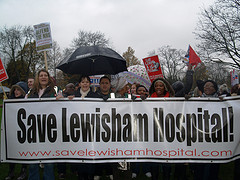
On Saturday,
November 24, despite the wet weather, an amazing 15,000 people turned out to
demonstrate against the threatened closure of Lewisham Hospital’s A&E
and maternity wings; it was reported on local BBC and ITV news broadcasts soon
after that evening. The demonstration, organised by “Save Lewisham
A&E” Campaign, was the response to the shock report issued on October
29 by South London Trust Special Administrator Matthew Kershaw proposing the
closure of Lewisham Hospital’s recently refurbished A&E department
and the new maternity unit. The demonstration follows a packed meeting on
November 9 in the hospital.
This magnificent turnout shows the strength of people’s feelings about the threatened closure of their A&E and their determination to stop it. In addition to the demonstration as many as 21,000 and rising to date have signed the on-line Save Lewisham Hospital petition. The demonstration marched from nearby Loampit Vale in Lewisham, ending with a symbolic joining of hands round the hospital. This was followed by a rally in Ladywell Fields next to the hospital.
At the rally, Lewisham Mayor Steve Bullock and local MP Joan Ruddock both spoke of the necessity to keep local health services open and paid tribute to the numbers of people who had come on the demonstration. “Never in my 30 years of political activity in Lewisham have I seen this level of anger and this level of involvement from people in this community”; an A&E worker spoke movingly how they at A&E loved to help people and want to be able to carry on their work for the local community. A nurse from Ealing spoke of their recent demonstration of 5,000 and spoke of the importance of banding together and supporting each other’s campaigns in the nation-wide fight to save the NHS. A local woman spoke about how Lewisham AE’s prompt treatment had saved her mother’s life which could well have been lost if she had to go to another hospital, and that is why she, “a regular woman living in a regular street”, was here on the demonstration. A Lewisham Hospital Consultant spoke of the madness of these proposals. Their hospital serves nearly a quarter of a million population in an area of high deprivation and health need, and provides excellent quality of care being among high performers nationally including in A&E and intensive care, and their popular birthing centre. He pointed out that Lewisham Hospital is financially sound and in balance. But the Private Finance Initiative (PFI) build in Woolwich has led to huge debt and several speakers pointed out that this was the objective of the proposals to pay for the PFI through removing services essential to local people.
Speakers pointed out the vital need of having a maternity service near at hand with intensive care and A&E in case of emergencies. They explained the difficulties people would have travelling to and from the Queen Elizabeth Hospital in Woolwich which is poorly served by public transport and can take several busses with young children or being frail or disabled. They explained the difficulties that people, especially those with young children or the frail or disabled, would have travelling to and from the Queen Elizabeth Hospital in Woolwich, which is poorly served by public transport, with a journey that can take several busses.
They also poured scorn on the “promises” made by Kershaw and the government that the proposed changes would lead to “improvements” in health care in the long-term.
Those thousands of people gathered listening in the darkening wet day outside their hospital had a powerful sense of determination. Here is a community and a hospital’s staff in action, they know their value, the value of their services, and they are not about to let their future be destroyed. The enormous success of this demonstration is a clear indication of the vital importance of keeping up the fight to defend health services, stop the destruction of the NHS throughout the country and effect a change in its direction away from privatisation and alleged financial failure towards the direction that health care is a right, which it is the duty of the government to guarantee.
The demonstration urged people to go all out in the two weeks left of the consultation period to send in their responses and get more people signing the petition. as well as to attend the public meeting on November 28 and the "Converge on Kershaw" meeting on December 4.
ShareThis
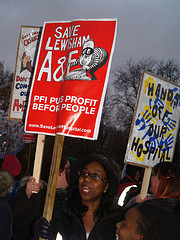
On Wednesday,
November 28, well over 500 people filled the Broadway Theatre in Catford, south
east London to oppose the planned closure of Lewisham Hospital’s A&E
section. This meeting follows the hugely successful demonstration the previous
Saturday in which 15,000 people marched. The campaign has been growing apace
ever since the issue of South London Trust Special Administrator Matthew
Kershaw’s draft report on October 29 proposing the closure of Lewisham
Hospital’s A&E department which, in effect would mean the downgrading
and closure of the whole hospital. The size of the demonstration and the packed
meetings which have been held is a testament to the determination of the people
of Lewisham and surrounding areas to do everything to stop Kershaw’s
plans and save their hospital.
The speeches by both the table and from the floor showed very clearly that the fight to save Lewisham Hospital is part and parcel of the struggle up and down the whole country to defend the NHS. The speeches were a powerful refutation of the government’s disinformation that financing the NHS has to be based on “balancing the books” and “productivity” and false declarations of “bankruptcy”. Speaker after speaker pointed out that health care is a human right which cannot be bought on the market. The Lewisham Hospital struggle clearly shows that the budget mechanisms created by the government to finance the NHS do not take into account the reality of working people’s lives; they have no coherence and are designed to create the maximum fragmentation and disruption to health services.
At the meeting, a consultant GP called the plans “ill thought out and dangerous” and would inevitably lead to more deaths. He poured scorn on the report pointing out that GPs had not been consulted and all were totally against the plans. He pointed out that even according to their sums the money saved by the proposal would only clear a small percentage of the debts accrued by the South London Healthcare Trust. As with many other people he said the report was not a response to the real world; to laughter in the hall he quoted the report which cynically states that people could get help from the Transport for London website for help in travelling to other hospitals which the closure of Lewisham’s A&E would necessitate. He announced that the on-line petition now had over 20,000 signatories. Other speakers pointed out that it was the poor and most vulnerable – the elderly, the youth, pregnant women, the sick – who would suffer most if they had to travel elsewhere.
A patient who had been dangerously ill in January movingly spoke about how Lewisham Hospital’s A&E had saved her life and praised the health workers for their care over the six weeks of her treatment. She described the proposals as “rubbish” and called on everyone to “save Lewisham hospital, as they saved me”.
Dr John Lister, an activist in the London Health Emergency Campaign (set up in 1983 to defend the NHS), gave a fighting speech in which he praised the consultants “who have had the guts to stand up and oppose the proposals”. He pointed out that hospital staff had to be involved with the campaign as well as people outside. He called the way the consultation was being run by the government and their hireling Kershaw, a “dictatorial and brutal process” pointing out that consultation period ends as early as December 14, the powers-that-be clearly wanting to rush the whole process through and that Health Secretary Jeremy Hunt will have the final say with no appeal. As a LHEC campaigner, he spoke of massive cuts and closures that have been imposed in many different parts of London and throughout the country. He described the PFI debts as “a black hole sucking in payments” which should be going on health care. He had “total contempt” for the way the report had been drawn up, saying that the “travel times” for going to other hospitals had been got from a database and was based on the assumption that there would be no traffic! He pointed out that the report had been drawn up by private consultants (McKinsey’s) who knew nothing of local conditions rather than by local people and health workers – consultants who were making huge sums of money from the NHS. He described what the government was doing to the NHS as a “major demolition job”.
Local MP Heidi Alexander praised the “incredible” demonstration on November 24 and quoted a placard on the demo which said “This is Not an Accident, it’s an Emergency”. Members of the audience heckled her over the previous Labour government’s implementation of PFI.
Maggie Palmer, a health worker in the mental health department, described the implications of the proposals for children in poverty who depend on the care and support provided by Lewisham Hospital. She pointed out that they could not be told to “go to Woolwich” (i.e. the Queen Elizabeth Hospital where people would have to go if Lewisham hospital closed) for support. She pointed out that ordinary people should not have to pay for “their” (i.e. the bankers, et al) crisis. She spoke of the need for strike action if necessary and said, “We can win – let’s go for it!”
Anita Downs, a local nurse, spoke of the passion health workers and patients had for Lewisham Hospital, asserting that these were “not austerity cuts but ideological cuts” and that the government’s attack on the NHS was an attack on “what is most civilising in our society”. She said that there “is more than enough money around but it's in the wrong hands”.
The meeting ended with many local people speaking against the plans; many stressed that the fight to save Lewisham Hospital was part of nationwide fight to save the NHS. The battle to save Lewisham Hospital is an indication of the struggle of the people throughout the country to change the way the NHS is being run and oppose the government’s championing of the rich financial oligarchy that are making huge profits from the wrecking of the NHS. It is a battle for the very future of the NHS and an affirmation that health care is a right.
Next meeting: Tuesday, December 4, 6pm, Calabash Centre, George Lane, Catford SE6 3HH – “Converge on Kershaw”. Matthew Kershaw, the special administrator appointed by the government is “consulting” with the public.
Come and tell him why you object to his proposals. This event coincides with the 55th anniversary of the Lewisham train crash when 90 people died but many lives were saved due to the proximity of Lewisham Hospital.
Website: http://www.savelewishamhospital.com
ShareThis
“We’ll fight for our jobs, anytime, any place, anywhere”:
Health workers throughout the country are on a daily basis opposing the attacks on the NHS and resolutely defending hospital jobs and services.
On November 20, NHS clerical staff in Wakefield, Dewsbury and Pontefract in Yorkshire began a three-day strike action over plans to axe 70 jobs and cut the pay of 275 other staff. Medical secretaries, receptionists and clerks in the same area had gone on a one-day strike earlier in the month.
Regional organiser of Unison Jim Bell said: “On top of the threat to axe 70 jobs, our members are also faced with losing up to £2,700 in pay. This is at a time when the Trust admits it has spent at least £3m on private sector consultants. The product of that vast expenditure was a recommendation to cut £600,000 from their annual budget. That is why the management wants to inflict brutal cuts to jobs and pay. Our members rightly think there is no need or justification for these cuts, especially when vast sums of public money are going straight into private consultants’ pockets.” Members of Unite have also balloted to strike and officials say feelings are running very high among staff.
Pam Johnson, Unison head of health for Yorkshire and Humberside, said: “This is terrible news for patients and for the local community who will lose vital health services. Cutting nursing staff at a time when we have an ageing population and have already lost nearly 6,000 nurses since the ConDems came to power should worry everyone who relies on the NHS in Rotherham. This announcement will be a devastating blow for families in the run up to Christmas. The jobs market is incredibly tough; people will struggle to find other work. The Trust says it is looking at voluntary redundancies and natural wastage but the scale of the job losses causes huge concern and compulsory redundancies aren’t ruled out of the Trust’s plans. Local people and dedicated NHS staff are paying the price for failings on behalf of senior managers in Rotherham, and for the pressure the government has put on NHS budgets.”
Unison reported that the MidYorks NHS strikers maintained: “We’ll fight for our jobs anytime, any place, anywhere.” This was in response to Mid Yorkshire NHS Trust’s chief executive, Stephen Eames – who earns some £300,000 a year, in contrast to the medical secretaries’ salary of £21,000 – telling reporters earlier this week that he was prepared to meet Unison officials “anytime, any place, anywhere” to try to resolve the dispute. Local Unison rep Andrea Busfield said: “If that’s the case, we’ll go and knock on his door as soon as we finish on this picket line.”
On November 20, Unison also announced SERCO’s threat to cut 17% of jobs in Suffolk Community Healthcare. SERCO, who have been managing Suffolk Community healthcare since October 1, stated in their analysis of proposed workforce structures which were distributed to all NHS staff on November 16 that their aim was to achieve:
a 20% reduction in band 3 generic health workers (75 whole time equivalent (WTE) posts down from 93.5)
a 17% reduction in physiotherapists (42 WTE down from 50.5)
a 15% reduction in band 5 community nurses (179 WTE down from 210)
a 13% reduction in band 6 nurses such as specialist nurses and district nurses (56.5 WTE down from 65).
Tim Roberts, regional organiser, said: "There is no way that Suffolk Community Healthcare can lose so many key professionals and maintain current services. SERCO underbid the NHS Trust that was previously managing the organisation by £10m and it's clear they now want to save that money by cutting the workforce. These job losses will have massive impact on health services in Suffolk and we fear that patients will suffer. Patients are clearly going to have to wait longer to see a health professional and vulnerable people are not going to receive the same quality service that is available now. UNISON warned that NHS Suffolk decision to award the contract to the cheapest bidder was a mistake but the scale of the proposed job losses are even worse than we feared."
ShareThis
British Government’s Interference in Middle East:

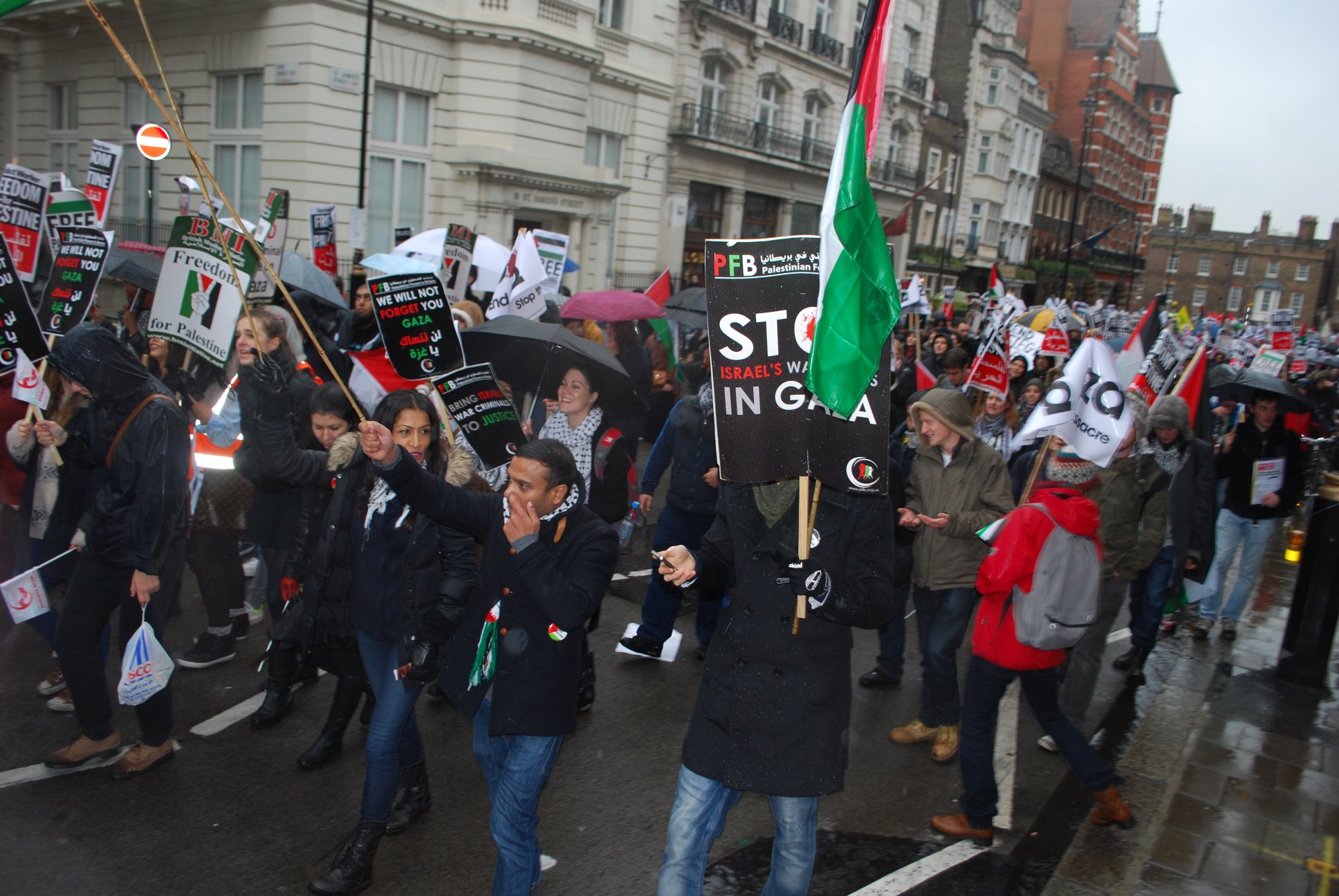
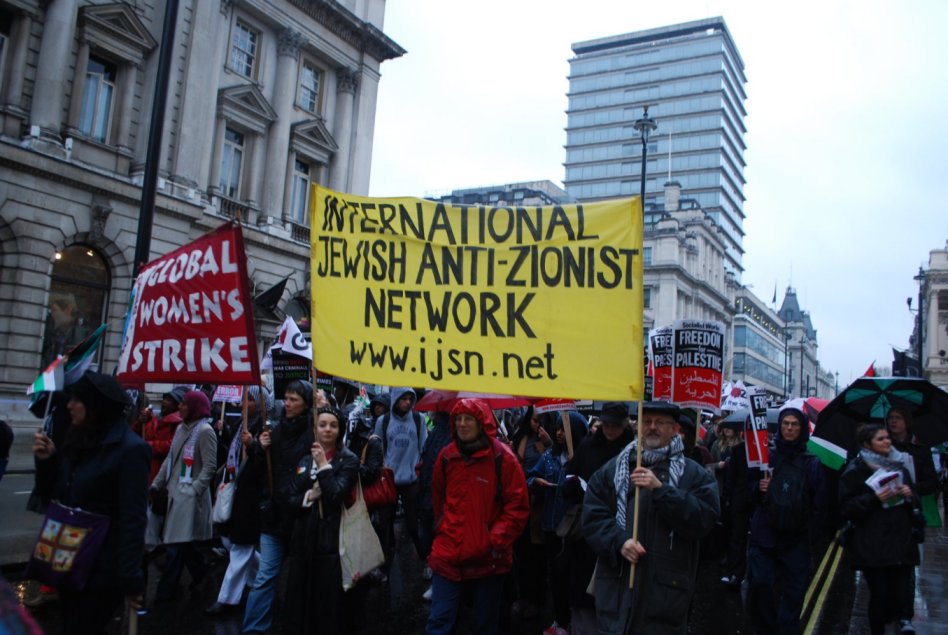
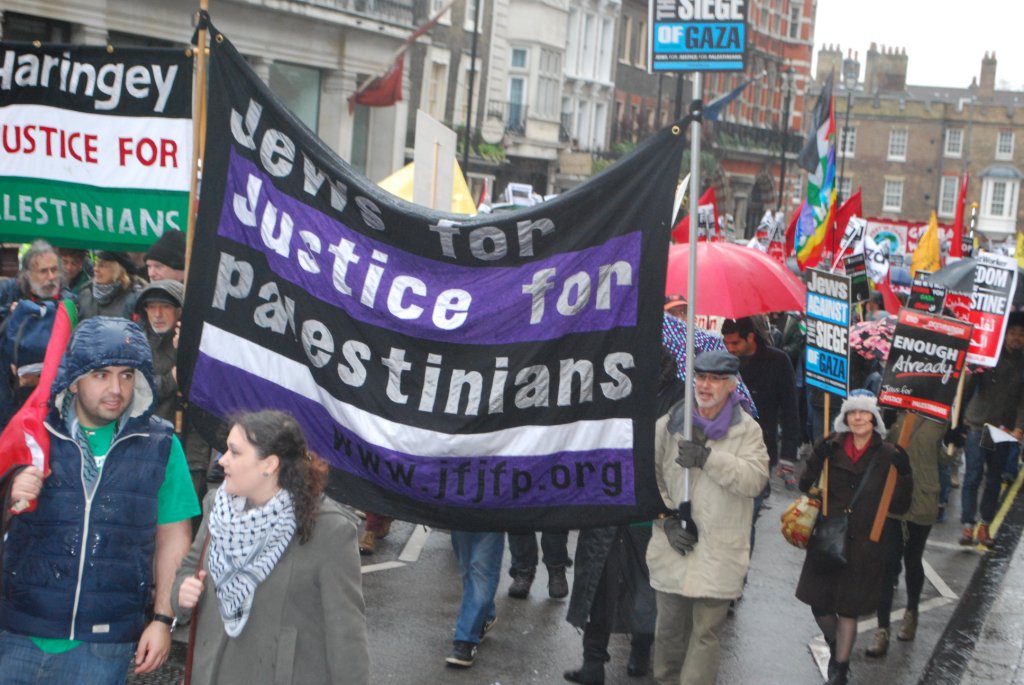
This week the British government showed once
again that it intervenes in the Middle East to advance its own geo-political
interests and to safeguard the position of Zionist Israel and not to further
the legitimate demands of the heroic Palestinian people, nor those of Syria or
other countries in the region.
Despite regular hand-wringing about the need to resolve the question of the Palestinians’ right to statehood, successive British governments continue to support Zionist Israel’s war crimes against the Palestinian people, labelling these crimes as acts of self-defence, while at the same time they refuse to recognise the right of the Palestinian people to self-determination, refer to the elected government of Gaza as a terrorist organisation and condemn its right to attempt to defend its citizens from the state terrorism of Israel.
It was in keeping with this approach and by employing blatant lies and disinformation that Foreign Secretary William Hague condemned Hamas for precipitating the recent bloody Zionist assault on Gaza. He put forward the argument that the impediments to advancing what he referred to as the “Middle East Peace Process” were the divisions between the patriotic Palestinian organisations, the “terrorism” of Hamas and the involvement in Iran which, it is alleged, is providing arms for the defence of the people of Gaza. What is especially noteworthy is that the Foreign Secretary does not consider the murderous activities of Zionist Israel to be in any way an obstacle to the “Peace Process”, nor the fact that it has been supplied with weapons, including weapons of mass destruction, by Britain, the United States and their allies since its creation in 1948. The Foreign Secretary even went as far as to suggest that the Palestinians should not demand state recognition by the UN and claimed that this too since might create an impediment to the “Peace Process”.
The Coalition government maintained this stand at the EU Foreign Minister’s meeting in Brussels and this gathering also condemned the Palestinians and merely called for a “de-escalation” of Israel’s murderous assault on Gaza. The government did voice its opposition to a full-scale ground invasion of Gaza, as did the US and others, but only because it calculated that this would be universally condemned and might lead to even greater support for the Palestinians in neighbouring countries as well as internationally. As in the past it has been the militant resistance of Palestinian people that has thwarted the criminal plans of Zionism and Anglo-American imperialism and forced the warmongers to seek a ceasefire and even to make concessions, which on paper appear to favour the people of Gaza.
In regard to Syria, the Foreign Secretary announced that the government would recognise those forces fighting against the Syrian government, the so-called National Coalition of Syrian Revolutionary and Opposition Forces, recently established under the auspices of Anglo-American imperialism and their reactionary allies in the region. The government together with its EU partners swiftly declared that this coalition is considered “the sole legitimate representative of the Syrian people” on the basis that it is prepared to do the bidding of Britain and its allies. As a consequence, the government announced that it would provide significant additional support and aid totalling some £2m to those fighting against the government of Syria, particularly in rebel-held areas within the country. By its own admission, the government is openly training and organising those engaged in a civil war, as well as providing arms through its proxies. Such criminal acts, which have had the effect of fuelling the conflict in Syria and have led to thousands of casualties, are a clear breach of international law and the UN Charter.
The British government sheds crocodile tears about the conflict in Syria just as it does over the plight of the Palestinians, but it is fully implicated in both tragedies. The government must be held accountable for the crimes it is committing throughout the region just as its predecessors must be held responsible for denying the Palestinians their national rights, creating and propping up the reactionary regimes and creating suffering and instability throughout the region. In these circumstances, workers and all democratic people in Britain must step up their own political struggles and create the conditions to establish their own anti-war government in Britain. This would be a government which fully recognizes the rights of all nations, which stops arming and supporting reactionary regimes, ceases all interference in the affairs of the people of other countries, which brings to book all those in Britain responsible for war crimes and crimes against the peace, and which makes reparation for all such crimes.
ShareThis
RCPB(ML) film production
ShareThis
Friends of Korea Commemorative MeetingMeeting to mark the first anniversary of the
passing Saturday, December 8, 2-5pm Marchmont Community Centre, All friends of Korea are warmly invited to participate in this meeting which will take a stand in celebrating the achievements of Kim Jong Il and of the people of the Democratic People?s Republic of Korea (DPRK) under his leadership. With a memorial film-showing, together with a number of short presentations highlighting the importance and significance of Kim Jong Il's life and work. Also highlighting the confident outlook of the Korean
people Organised by the British Committee to |
ShareThis