
|
|
||||
|---|---|---|---|---|
| Volume 52 Number 18, July 23, 2022 | ARCHIVE | HOME | JBCENTRE | SUBSCRIBE |
136th Durham Miners Gala and Big Meeting:
Workers' Weekly Internet Edition: Article Index : ShareThis
136th Durham Miners Gala and Big Meeting:
Affirming the Central Role of the Working Class in Society, Present and FutureWorkers' Forum:
Workers' Struggles in Defence of Rights Gather Momentum and ScopeIsle of Wight Ferry Strike:
Red Funnel Workers Announce Summer Strike ActionCrimes of British Special Forces in Afghanistan:
Extrajudicial Killings Par for the Course
136th Durham Miners Gala and Big Meeting:


Taking place on July 9, the 136th Durham Miners Gala, returning to the streets of Durham after a two-year hiatus caused by the Covid pandemic, was a vast affirmation of the strength and unity of the working class, and its central role in society's development.
The numbers appeared to confirm the organisers' estimate of the anticipated 200,000. Certainly the more than 50 brass bands and the spectacular arrays of more than 60 miners' lodge banners, as well as those of union branches, and others from the working class movement, surpassed any since before the 1984-85 miners' strike. The Gala, together with its Big Meeting, confirmed its importance as an event of historical and cultural importance in the life of the country as a whole, and even further afield. It is of contemporary significance, and, drawing on the traditions, history and values of the miners and their communities, also points to the future.
Hosted by the Durham Miners Association (DMA), the Gala was established in 1871 and this year's event was dedicated to key workers. As the DMA Chair Stephen Guy said: "We are proud to dedicate the 2022 Gala to our key workers and give our platform to them and their trade union leaders. As the pandemic showed so starkly, it is the key workers of this country that we truly need. They deserve much improved pay and conditions, but it is our key workers who are often bearing the brunt of the cost of living crisis."
A disciplined sea of contingents, so many led by their bands, with their participants young and old, and the ability of these brass players to transform their material into something magical, marched through Durham, past the County Hotel on Old Elvet. Here many stopped to perform for the keynote speakers and trade union leaders gathered on the County balcony, as is the tradition, always eliciting enthusiastic applause from the crowds stacked many deep along the route to the Old Racecourse by the River Wear.

As is traditional, the Big Meeting itself began with the moving playing of "Gresford" to remember all the miners who gave their lives in the hewing of coal. It reminds us also, as was once said, that the working class must also be the hewers of society. "Gresford" was written in 1936 by Robert Saint, a musician and former mine-worker from Hebburn, South Tyneside, to commemorate the 266 men who were killed at the Gresford Colliery, north Wales, on September 22, 1934, in an explosion and underground fire.
DMA chairman Stephen Guy oversaw proceedings on the Racecourse, and set the refreshing and unapologetic tone in defence of the rights and interests of the working class in introducing the speakers at the Big Meeting. In keeping with this theme, no MPs had this year been invited to appear on the platform and address the meeting. The thread running through all the speeches was that of the need for working class solidarity and organisation.
Accordingly, two key workers who worked through the pandemic - Holly Johnston, a nurse and member of the GMB union, and Rohan Kon, a postal worker and member of the CWU - joined RMT general secretary Mick Lynch and other speakers Sharon Graham of Unite, Patrick Roach of the teaching union NASUWT, Jo Grady of the further and higher education union UCU, and Clare Williams, Unison Northern's Regional Secretary, in addressing the meeting. Yvette Williams, a co-founder of the Justice4Grenfell movement, also spoke, highlighting the issue of trade unions and community organisations working together.
In a powerful speech, Mick Lynch declared: "We're back. The working class is back. We refuse to be meek, we refuse to be humble and we refuse to be poor any more." Labelling the Tory party as a party of billionaires and a public school elite, he continued: "We cannot tolerate any more their ruthless pursuit of profit. We have to be ruthless in our pursuit of social justice."

These words complemented some of the profound slogans which have been painted over the years on the miners' banners. For example, the Murton Lodge banner has the slogan emblazoned: "The Future Is In Your Hands". The working class, as a class with its own aim and political programme, consciousness and organisation, cannot be negated and refuses to be eliminated. Human productive powers demand to be brought under the control of the working class and people themselves. In this way, the Durham Miners Gala points the way to the future of the whole of society.
The 137th Durham Miners Gala will take place on Saturday, July 8, 2023.
The website of the "Marras", the Friends of Durham Miners Gala, points out: "For more than a century, the Gala was funded by the county's working miners through their subscriptions to their trade union, the Durham Miners Association (DMA). Following the closure of the collieries, the DMA founded the Friends of Durham Miners Gala (FODMG). Today, the Gala is funded by the donation and subscription through FODMG. Those who contribute are known as 'Marras' - a Durham miners' term for a trusted friend who can be relied on in times of need."
To join the Marras and contribute to the funding of the Gala, click here.


A selection of photos from the Gala and Big Meeting
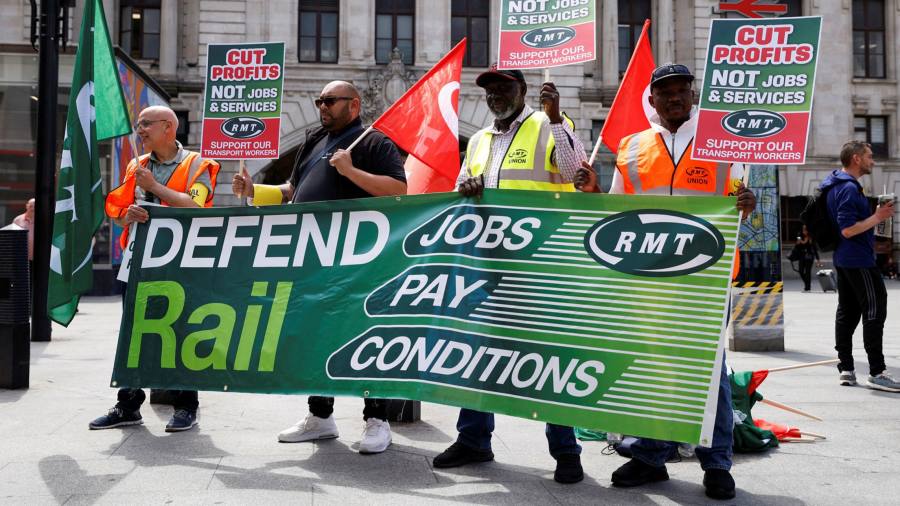
This summer has seen strike actions breaking out across all sectors of the economy, drawing in ever wider sections of the working class.
The transport sector in particular has seen a large number of struggles break out recently. Last month, as is well known, the biggest national rail strike in thirty years took place involving tens of thousands of workers, members of RMT, in a dispute over pay and jobs. A further strike date of July 27 has now been announced.
There are a number of regional and local actions over this same period, all over similar issues of pay. Members of the drivers' union ASLEF at eight train companies have voted to strike.
This includes at Great Anglia, where drivers will begin a second 24-hour strike on Saturday, July 23, predicted to halt over 90% of services on the network. They had previously struck on June 23.
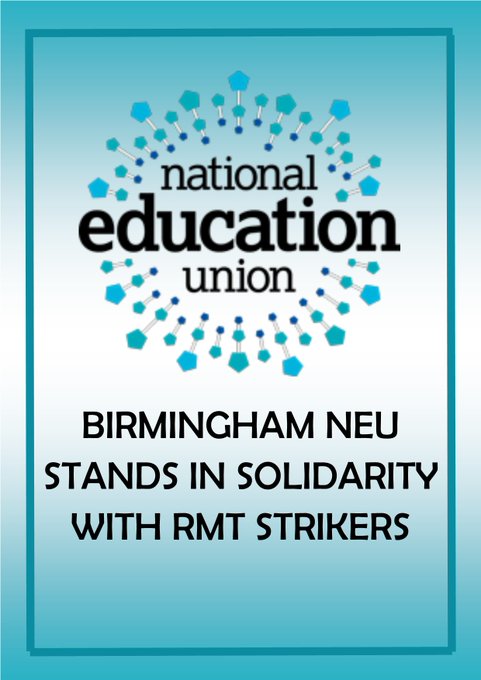
Members of the Transport Salaried Staffs Association (TSSA) have also voted for strikes at Southeastern and at Avanti West Coast, and the union is balloting at Network Rail, Trans Pennine Express, Great Western Railway, C2C, LNER and Northern, Cross Country, East Midlands Railway and West Midlands Trains. TSSA members also recently accepted a 7.1% pay deal at Merseyrail.
Other transport struggles over the course of this summer include: Doncaster rail maintenance workers; tram drivers for Tramlink in Croydon; Stagecoach bus drivers in Merseyside and Worthing; Arriva bus staff across north-west England; Red Funnel workers on the Southampton-Cowes ferry link; British Airways check-in staff; and airport tanker drivers for North Air Glasgow. Staff in cleaning roles on GTR, Network Rail, HS1 and South East Trains employed by Churchill have also been in action.
In another important struggle, over 115,000 Royal Mail workers have voted overwhelmingly to strike in what could be its largest ever action. 97.6% of Communication Workers Union members voted in favour on a turnout of 77% - a "stunning result" in the words of General Secretary Dave Ward. Workers are angry after being offered a "disgraceful" 2% offer, in the wake of the company reporting record profits of £758m earlier this year and paying shareholders some £400m in dividends.
Also in the communications sector, BT workers have voted for their first national strike in 35 years. The striking phone and internet engineers and call centre staff, members of CWU, make up most of a frontline workforce numbering some 58,000 employees. In April, BT gave a £1,500 pay rise in what it said was its biggest award in twenty years. The CWU, however, called the offer "insulting" in the face of soaring inflation, and is demanding a 10% rise.
Refuse collection is a further sector experiencing a wave of strike action over low pay. Lorry drivers employed by Coventry Council, members of Unite, have been striking since January. A unanimous 100% of the vote in a ballot in June supported continuing the action until an agreement is reached.
Also in June, a similar strike of bin workers in Wealden ended after six weeks and two days of action with an impressive victory. The GMB members secured a pay deal from their employer, Biffa, amounting to 24%-27%. The strike saw attempts to suppress workers, where, in an outrageous act, police made arrests on the picket line. Those arrested remained in police custody for hours and were charged with obstructing a public highway. They have been ordered to appear at Hastings Magistrates Court.
Unison also report that refuse workers in Harlow have voted for strike action.
This summer has seen or will see action by workers across manufacturing. To mention just a cross-section, these include workers at: the CNH Industrial tractor factory in Basildon; flooring manufacturer Interface Europe, based in Craigavon; Tipton CabAuto, which builds luxury car interiors; Owens Illinois Glass; Sun Chemical ink manufacturers, at sites across the country; the Carlisle can factory; sheet metal workers at Darchem Engineering, Stockton-on-Tees; RLC Engineering-owned precision engineering aerospace manufacturer Langford Lodge; Bosch Rexroth Glenrothes; Budweiser; and Moy Park Randalstown animal feed mill.
There are also struggles ongoing at major housing association Thirteen Housing Group and at Whirlpool UK Appliances Limited.

Rail strikers march with striking hospital cleaners in Tooting
Public authorities are facing action, such as: the Financial Conduct Authority; the Shetland Isles Port Authority; Marine Scotland; and Hackney council services including parking, refuse, building and disability transport.
In the sector of health and social care, staff employed by Bristol-based St Monica Trust, at four care homes across South Gloucestershire, North Somerset, and Bath and North East Somerset, are in struggle, as are health workers in Lancashire employed by private contractor OCS (including porters, caterers and cleaners).
The lists go on, and it is virtually impossible to mention all. It is clear that workers' struggles are gathering momentum and scope.
In the context of the cost-of-living crisis, the focus is workers' laying the claims on the product of their labour, the new value they create in the economy, when this very same productive work is considered a cost by the owners of capital. The constant refrain in each struggle is derisory pay "offers" a mere fraction of inflation, which stands at levels not seen for decades, while companies in many cases report massive profits.
The very real and growing anger is being expressed that "Enough is Enough!". It is becoming ever clearer that workers themselves need to speak out and collectively and individually elaborate their solutions to the deepening crisis. Their claims on the value that they produce are just. A livelihood and a decent standard of living is a right. A modern economy can be made to serve the people's interests. What is required is a new direction for the economy and the control of political affairs in the hands of working people.
(Sources: Labour Start, National Shop Stewards Network, trade union reports)
Isle of Wight Ferry Strike:

(Image: IOW County Press)
Workers employed by Red Funnel, which operates ferries between Southampton and the Isle of Wight, are preparing to take militant strike action over pay. Members of Unite the Union, who make up 20% of Red Funnel workers, argue that the pay offer from the company is far below the inflation rate in the actual cost of living, currently running, the union says, at 11.7% and rising.
Talks broke down as Red Funnel brazenly declared to workers that they are not going to take the current cost-of-living crisis and inflation into account. They say that the negotiation is limited to 2022 pay, thereby dismissing the situation, and give the reason as being that discussions have been ongoing for six months under different criteria and conditions. The workers, who are essential workers providing connectivity between the island and the mainland, working hard throughout the pandemic and recognised for their contribution, are being mistreated despite their contribution to the wellbeing of all citizens on the island.
Unite first presented its 16% pay claim in December last year. Company intransigence blocked any settlement, which otherwise could have been agreed by the start of this year. Instead, Red Funnel management offered just 4.5%, rising to 6.3% for roles within the collective bargaining unit. This simply ignores the workers' claim in favour of the property rights of the owners of the company's capital.
The eleven 24-hour strike dates announced by the union are August 1, 3, 5, 9, 11, 15, 17, 19, 23, 26 and 29. Major island events taking place during some of those dates include the Ventnor Fringe Festival, Cowes Week and the Summer Bank Holiday period.
Red Funnel responded to the announcement by threatening strike-breaking actions, saying they expect to continue sailing on those dates, but with a revised timetable.
"We expect to keep sailing on these dates, albeit to a revised vehicle ferry timetable. Our Hi-Speed Red Jet service is expected to operate as scheduled," said Leanna Lakes, Operations Director at Red Funnel. "Now that we have dates in hand, we can proceed to finalising an updated timetable, which we intend to share by Wednesday, July 13."
"I am incredibly disappointed that members have voted for strike action," said company CEO Fran Collins. "We are keen to recognise and reward all colleagues, particularly during these uncertain times, however we must be realistic in terms of what the business can afford to ensure we continue to provide lifeline services for our customers, promoting the long-term success of the Island economy."
All workers concerned with the rights of all stand in solidarity. Recognising the rights of all includes supporting those relied upon during the pandemic, who took great risks to ensure safe connectivity between the island and the mainland. Workers cannot afford to allow companies like Red Funnel, which accumulate large profits, to withhold just pay settlements in line with rising inflation.
Citizens of the island have long known that the ferry routes connecting the island to the mainland are the most expensive in the world. Red Funnel enjoys a lucrative monopoly position over the route, and exorbitant profiteering via cartel price-fixing has been the way of the Isle of Wight ferry companies for many years, since privatisation handed them direct control. People need to be empowered as a new authority exercising control over these routes. The ships should come under public ownership and control within the Isle of Wight.
(Sources: Unite the Union, On the Wight)
Crimes of British Special Forces in Afghanistan:
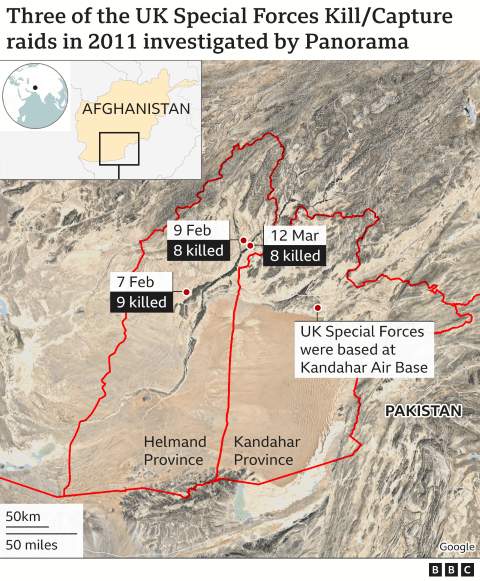
Evidence of the killing of defenceless prisoners in Afghanistan by members of the Special Air Service (SAS), has been in the news. SAS is a secretive Special Forces unit of the army about which the BBC made a documentary which was released on July 12. The programme was part of the current affairs investigatory journalism series, Panorama, and was based on the scrutiny of the actions of one squadron in the 2010 to 2011 period.
Panorama reported that SAS operational accounts and interviews with individuals who served with the SAS revealed that SAS operatives had killed unarmed people during night raids. Fabricated reports covered up that SAS operatives had planted weapons at the scene to justify killing unarmed men. The Panorama report provides examples of "strikingly similar" operational reports on men who had been killed after allegedly pulling AK-47 rifles or hand grenades from behind curtains. It said, "Several people who served with special forces said that SAS squadrons were competing with each other to get the most kills, and that the squadron scrutinised by the BBC was trying to achieve a higher body count than the one it had replaced."
The BBC investigation focused primarily on one six-month deployment by a squadron operating mainly in Helmand province starting in November 2010. The main role of the squadron was deliberate detention operations, also known as "kill or capture" raids, to detain Taliban commanders and disrupt bomb-making networks. It was reported that civilians could easily end up on a list of targets for these raids.
"Internal emails show that officers at the highest levels of Special Forces were aware there was concern over possible unlawful killings, but failed to report the suspicions to military police despite a legal obligation to do so."
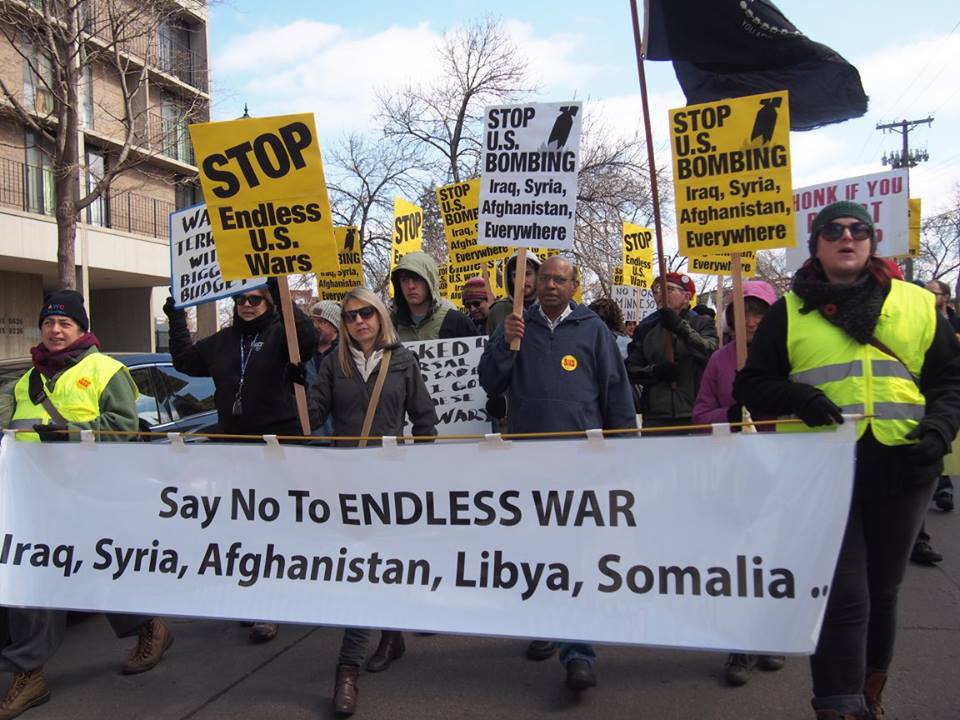
The death toll of the squadron investigated was "in the triple figures" during its six-month tour, with evidence that 54 may have been "unlawfully killed". There were no injuries to SAS operatives in any of the raids scrutinised by the BBC.
The extraordinary number of people being killed on the SAS night raids was noted as a concern by senior officers in February of 2011, with internal memos describing reports from the squadron as "quite incredible" and even speaking of the squadron's "latest massacre", and an email from an operations officer to a colleague saying that "for what must be the 10th time in the last two weeks" the squadron had sent a detainee back into a building "and he reappeared with an AK".
The documents reviewed revealed that in 2011 and 2012 senior officers were informed about the suspicious killings but that information was not passed to the Royal Military Police (RMP). From 2014 to 2019 the RMP conducted Operation Northmoor, an investigation into more than 600 alleged offences by British forces in Afghanistan which included a number of killings by the SAS squadron, in which they were obstructed by British military in efforts to gather evidence.
Troops from the US, Australia and Poland have also been accused of extrajudicial killings in Afghanistan. In Australia a military investigator reported in November 2020 with details of 23 cases with 39 fatalities and evidence that the Australian Special Air Service Regiment responsible covered up the killings. Attempts by the International Criminal Court to investigate alleged US crimes were blocked by the US government.
All such "special forces" should be disbanded immediately and brought to justice. In particular, the outcry regarding the Panorama exposé must not be ignored, and the finger must be pointed at those at the highest level who have sanctioned these crimes.
(TML Daily)
Receive Workers'
Weekly E-mail Edition: It
is free to subscribe to the e-mail edition
We encourage all those who support the work of RCPB(ML) to also support it
financially:
Donate to
RCPB(ML)
Workers' Weekly is the weekly on
line newspaper of the
Revolutionary Communist Party of Britain (Marxist-Leninist)
Website:
http://www.rcpbml.org.uk
E-mail:
office@rcpbml.org.uk
170, Wandsworth Road, London, SW8 2LA.
Phone: 020 7627 0599:
