
|
|
||||
|---|---|---|---|---|
| Volume 52 Number 18, July 23, 2022 | ARCHIVE | HOME | JBCENTRE | SUBSCRIBE |
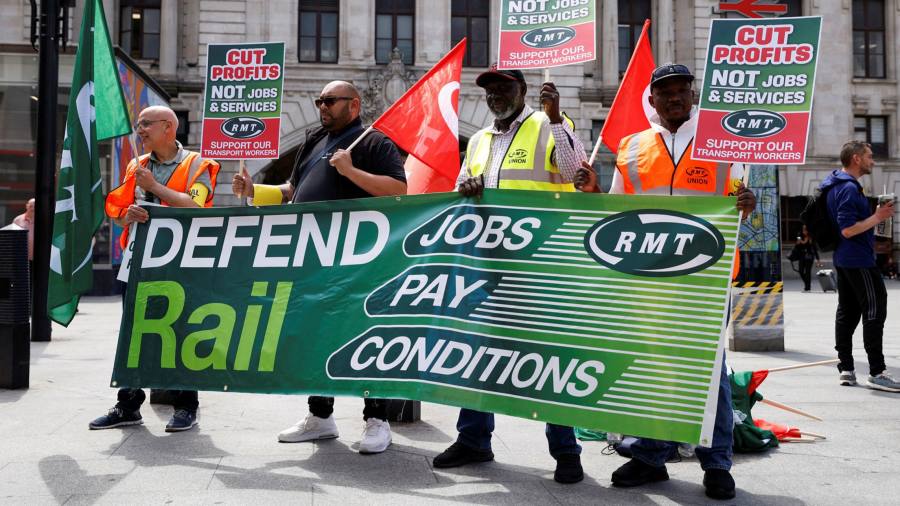
This summer has seen strike actions breaking out across all sectors of the economy, drawing in ever wider sections of the working class.
The transport sector in particular has seen a large number of struggles break out recently. Last month, as is well known, the biggest national rail strike in thirty years took place involving tens of thousands of workers, members of RMT, in a dispute over pay and jobs. A further strike date of July 27 has now been announced.
There are a number of regional and local actions over this same period, all over similar issues of pay. Members of the drivers' union ASLEF at eight train companies have voted to strike.
This includes at Great Anglia, where drivers will begin a second 24-hour strike on Saturday, July 23, predicted to halt over 90% of services on the network. They had previously struck on June 23.
Members of the Transport Salaried Staffs Association (TSSA) have also voted for strikes at Southeastern and at Avanti West Coast, and the union is balloting at Network Rail, Trans Pennine Express, Great Western Railway, C2C, LNER and Northern, Cross Country, East Midlands Railway and West Midlands Trains. TSSA members also recently accepted a 7.1% pay deal at Merseyrail.
Other transport struggles over the course of this summer include: Doncaster rail maintenance workers; tram drivers for Tramlink in Croydon; Stagecoach bus drivers in Merseyside and Worthing; Arriva bus staff across north-west England; Red Funnel workers on the Southampton-Cowes ferry link; British Airways check-in staff; and airport tanker drivers for North Air Glasgow. Staff in cleaning roles on GTR, Network Rail, HS1 and South East Trains employed by Churchill have also been in action.
In another important struggle, over 115,000 Royal Mail workers have voted overwhelmingly to strike in what could be its largest ever action. 97.6% of Communication Workers Union members voted in favour on a turnout of 77% - a "stunning result" in the words of General Secretary Dave Ward. Workers are angry after being offered a "disgraceful" 2% offer, in the wake of the company reporting record profits of £758m earlier this year and paying shareholders some £400m in dividends.
Also in the communications sector, BT workers have voted for their first national strike in 35 years. The striking phone and internet engineers and call centre staff, members of CWU, make up most of a frontline workforce numbering some 58,000 employees. In April, BT gave a £1,500 pay rise in what it said was its biggest award in twenty years. The CWU, however, called the offer "insulting" in the face of soaring inflation, and is demanding a 10% rise.
Refuse collection is a further sector experiencing a wave of strike action over low pay. Lorry drivers employed by Coventry Council, members of Unite, have been striking since January. A unanimous 100% of the vote in a ballot in June supported continuing the action until an agreement is reached.
Also in June, a similar strike of bin workers in Wealden ended after six weeks and two days of action with an impressive victory. The GMB members secured a pay deal from their employer, Biffa, amounting to 24%-27%. The strike saw attempts to suppress workers, where, in an outrageous act, police made arrests on the picket line. Those arrested remained in police custody for hours and were charged with obstructing a public highway. They have been ordered to appear at Hastings Magistrates Court.
Unison also report that refuse workers in Harlow have voted for strike action.
This summer has seen or will see action by workers across manufacturing. To mention just a cross-section, these include workers at: the CNH Industrial tractor factory in Basildon; flooring manufacturer Interface Europe, based in Craigavon; Tipton CabAuto, which builds luxury car interiors; Owens Illinois Glass; Sun Chemical ink manufacturers, at sites across the country; the Carlisle can factory; sheet metal workers at Darchem Engineering, Stockton-on-Tees; RLC Engineering-owned precision engineering aerospace manufacturer Langford Lodge; Bosch Rexroth Glenrothes; Budweiser; and Moy Park Randalstown animal feed mill.
There are also struggles ongoing at major housing association Thirteen Housing Group and at Whirlpool UK Appliances Limited.

Rail strikers march with striking hospital cleaners in Tooting
Public authorities are facing action, such as: the Financial Conduct Authority; the Shetland Isles Port Authority; Marine Scotland; and Hackney council services including parking, refuse, building and disability transport.
In the sector of health and social care, staff employed by Bristol-based St Monica Trust, at four care homes across South Gloucestershire, North Somerset, and Bath and North East Somerset, are in struggle, as are health workers in Lancashire employed by private contractor OCS (including porters, caterers and cleaners).
The lists go on, and it is virtually impossible to mention all. It is clear that workers' struggles are gathering momentum and scope.
In the context of the cost-of-living crisis, the focus is workers' laying the claims on the product of their labour, the new value they create in the economy, when this very same productive work is considered a cost by the owners of capital. The constant refrain in each struggle is derisory pay "offers" a mere fraction of inflation, which stands at levels not seen for decades, while companies in many cases report massive profits.
The very real and growing anger is being expressed that "Enough is Enough!". It is becoming ever clearer that workers themselves need to speak out and collectively and individually elaborate their solutions to the deepening crisis. Their claims on the value that they produce are just. A livelihood and a decent standard of living is a right. A modern economy can be made to serve the people's interests. What is required is a new direction for the economy and the control of political affairs in the hands of working people.
(Sources: Labour Start, National Shop Stewards Network, trade union reports)