|
|
||||
|---|---|---|---|---|
| Volume 56 Number 25, August 29, 2026 | ARCHIVE | HOME | JBCENTRE | SUBSCRIBE |
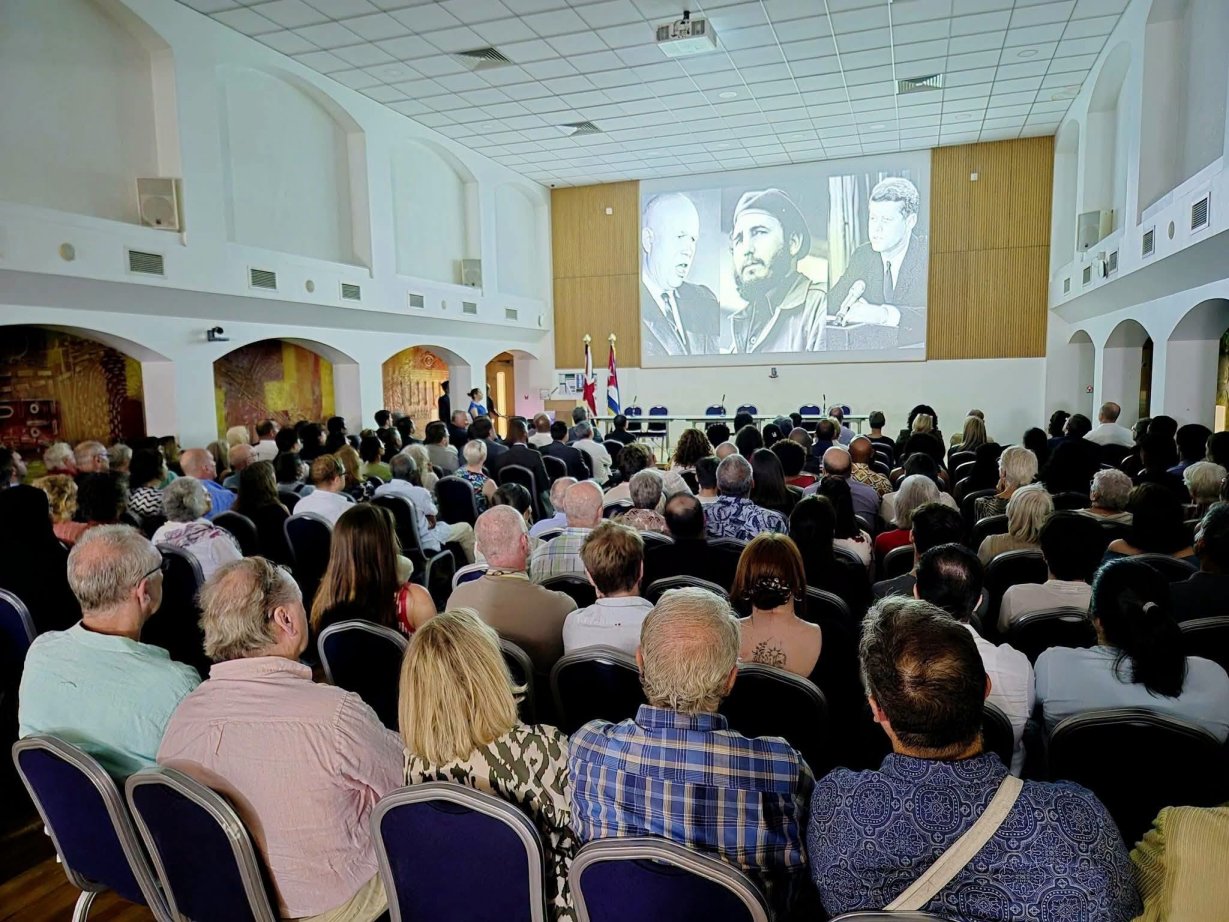
The Cuban Embassy in the UK welcomed nearly two hundred guests to Mander Hall, Hamilton House, central London, on the morning of August 13, the 100th anniversary of the birth of Fidel Castro. Ambassadors and members of the diplomatic corps, staff from the Cuban Mission, Cuban residents from across Britain, members of the Cuba Solidarity Campaign, academics, trade unionists, people from the business world, and activists and friends of Cuba who simply would not miss it packed the hall. By the time the lights dimmed the Hall could not hold everyone who wanted to be there, and not a spare seat was left.
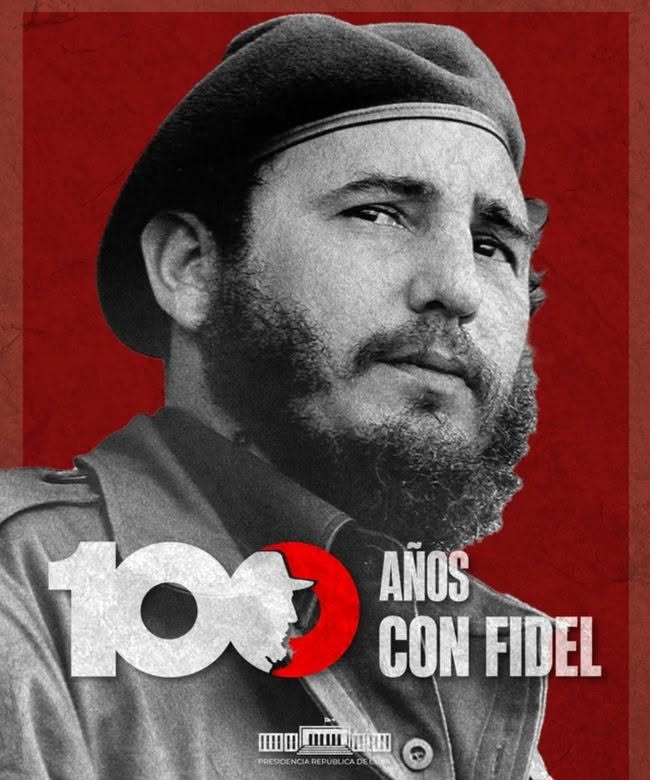
It was the very date of the centenary - August, 13, 1926, to August 13, 2026: one hundred years since a boy from a modest house in Birán, Oriente, grew into a country.
The morning opened with a short tribute film tracing Fidel's life, his legacy, the achievements of the Cuban Revolution he led, and the international solidarity he built across the world. Woven through it were brief contributions from doctors, trade unionists, academics, film-makers, campaigners and politicians, each speaking to what that legacy means in their own corner of society. Some of them had actually known Fidel in person. They were friends speaking about a legacy, friends remembering a man.
MP Jeremy Corbyn took the platform next, and spoke with real feeling about what Fidel built for every corner of Cuban society and for the cause of international solidarity, then went further, calling on Britain to deepen its solidarity with Cuba at every level, including government to government. To applause, Jeremy Corbyn called on the British government to stand up to the USA and break the US oil siege on Cuba and send humanitarian aid to the island. Coming from someone who, this March, rode in the Nuestra América convoy into Havana and stood inside a cancer hospital struggling to keep its machines running through a blackout, with Richard Burgon MP alongside him, those words carried weight.
The Cuban Ambassador, Ismara Vargas Walter, closed the event, and the room was filled with expectancy as she took the podium.

MP Jeremy Corbyn speaking for the cause of international
solidarity
The Ambassador took us back to the beginning: a twenty-six-year-old leading the assault on the Moncada barracks, captured, standing alone at his own trial to say the words that outlived every judge in that courtroom: "Condemn me. It does not matter. History will absolve me." Prison. Exile in Mexico. Eighty-two men on a leaking yacht called Granma, scattered on a beach under fire, barely a dozen reaching the Sierra Maestra alive. From that dozen, in under two years, a country and a Revolution.
She reminded us what he did with that victory: over one hundred thousand volunteer teachers, many of them teenagers, walking into the mountains until Cuba could declare itself free of illiteracy. Cuban doctors in Chile and Algeria by 1961 and 1963. Cuban internationalists at Cuito Cuanavale, standing with a nation fighting apartheid, the same struggle Nelson Mandela himself later called a turning point in the liberation of his continent.
And then she brought us to the present: a naval armada in the Caribbean, oil tankers tracked and seized on the high seas, a total fuel blockade, "a profound breach of the equality of states and sovereignty", in her words, not a bilateral dispute. Families cooking over firewood. Blackouts lasting entire days. Eleven thousand children among more than one hundred thousand people waiting for surgeries that cannot be safely scheduled. Survival for a Cuban child with cancer and infant mortality, fallen. "When a hospital in Havana loses power tonight," she said, "it is not the weather. It is policy, arriving exactly as designed."
And still, three hundred Palestinian students are training as doctors in Cuba right now, free of charge, because Fidel taught his country that internationalism is a debt paid, not a favour granted. And to be internationalist is to pay our own debt to humanity.
She thanked the National Education Union for opening Hamilton House's doors to the Cuban Mission once again, she thanked the 117 MPs who backed this year's Early Day Motion against these illegal unprecedented sanctions, and she paid tribute to six decades of the Cuba Solidarity Campaign's unwavering friendship.
Fidel is a hundred years old today, she told the room. Cuba is still standing.
¡Hasta la victoria siempre, Comandante!
(Embassy of Cuba in the UK)
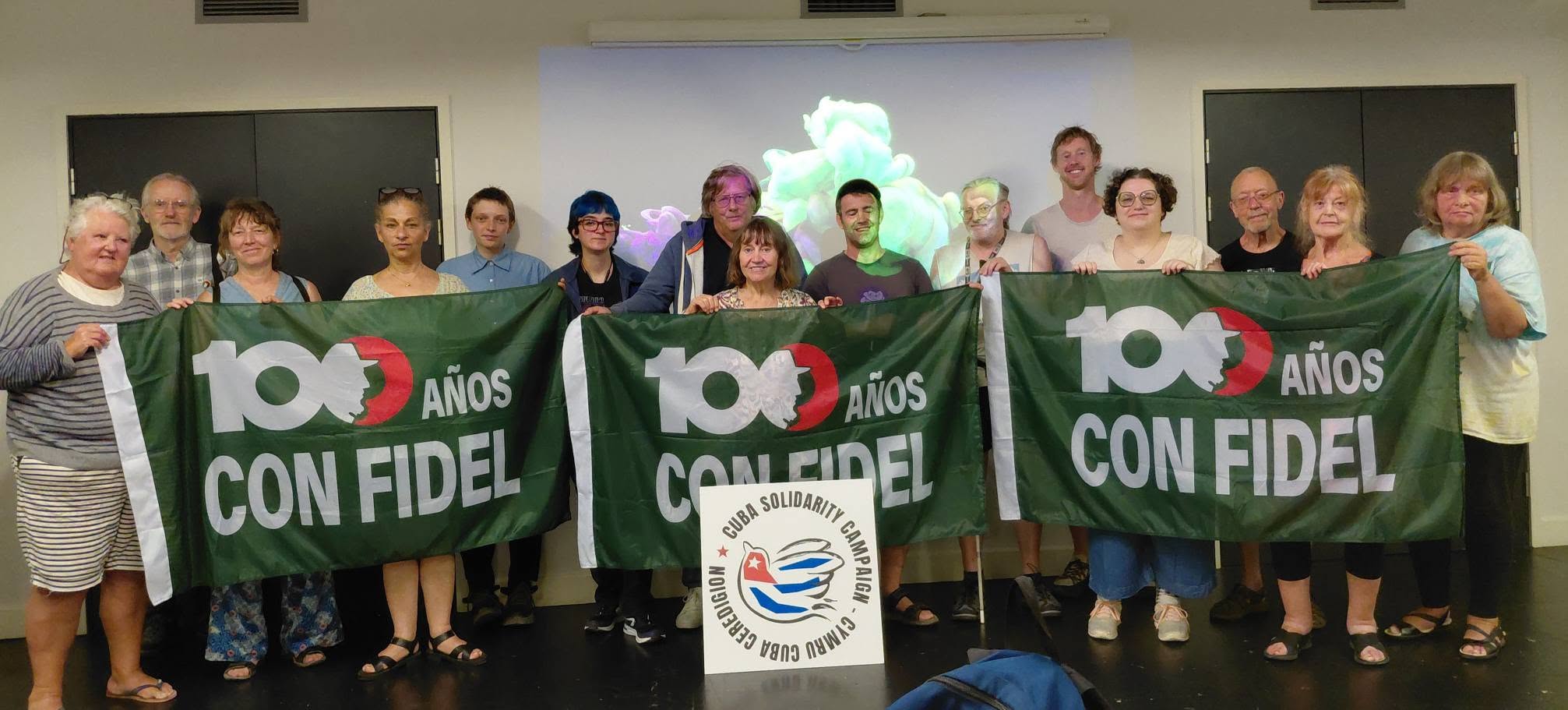
On August 13, Theatr AradGoch in Aberystwyth hosted a special centenary screening of Moments
With Fidel, a powerful documentary by Cuban filmmaker Rebeca Chávez. The film examines Fidel's pivotal role leading the Cuban Revolution and the global anti-imperialist movement. The audience, drawn from Aberystwyth and neighbouring towns, was united in its condemnation of the US blockade and its collective determination to step up international solidarity.
(Cuban Embassy in the UK)
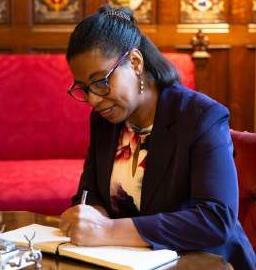
H.E. Ismara Mercedes Vargas Walter, Ambassador of Cuba to
the United Kingdom
Writing on behalf of the Cuban Embassy in the UK, Ambassador Ismara Mercedes Vargas Walter affirms that Fidel's guiding conviction was simple, and it has never gone out of date: that a nation's sovereignty, its dignity and its solidarity with others are not negotiable, not even under the heaviest pressure a great power can bring to bear.
This year, in Britain, we have watched that carrying-forward happen in real time, she writes. Parliamentarians who have kept Cuba alive across motions, written and oral questions, and pushed for ratification of the Political Dialogue and Cooperation Agreement [1]. A Trades Union Congress that has invited the new leadership of Cuba's Workers' Central to address its Brighton Congress in September, the clearest possible descendant of the internationalism Fidel built between Cuban and British working people. Trade unionists who filled halls from Liverpool to Warwick to Brighton to hear, plainly, what a blockade does to a hospital, a household, a harvest, a people.
Note
[1] Lithuania is the only EU member state that has officially refused to ratify the EU-Cuba Political Dialogue and Cooperation Agreement (PDCA), effectively blocking its full legal implementation. Because it is a "mixed agreement", the treaty requires unanimous ratification from all EU member states. While the agreement has been provisionally applied since November 2017, it remains stuck in diplomatic limbo. Countries/Entities That Have Ratified - Cuba: Formally ratified the agreement on May 20, 2019. The European Parliament gave its official consent on July 5, 2017. The vast majority of the 26 EU member states completed their domestic ratification processes between 2017 and 2020. Official records from the Council of the European Union confirm ratifications from countries such as: 2017: Hungary, Slovakia, Latvia, Finland; 2018: Luxembourg, Poland, Romania, Slovenia, Malta, Austria, Portugal, Cyprus; 2019: Croatia, Italy, Netherlands; 2020: Sweden (among the last of the group ). The United Kingdom also ratified the agreement in 2018 while it was still an EU member state. Countries That Have Not Ratified - Lithuania: The Lithuanian Parliament (Seimas) passed a formal resolution explicitly refusing to ratify the pact.